Best Class 4 Shingles for Homeowners: What to Check
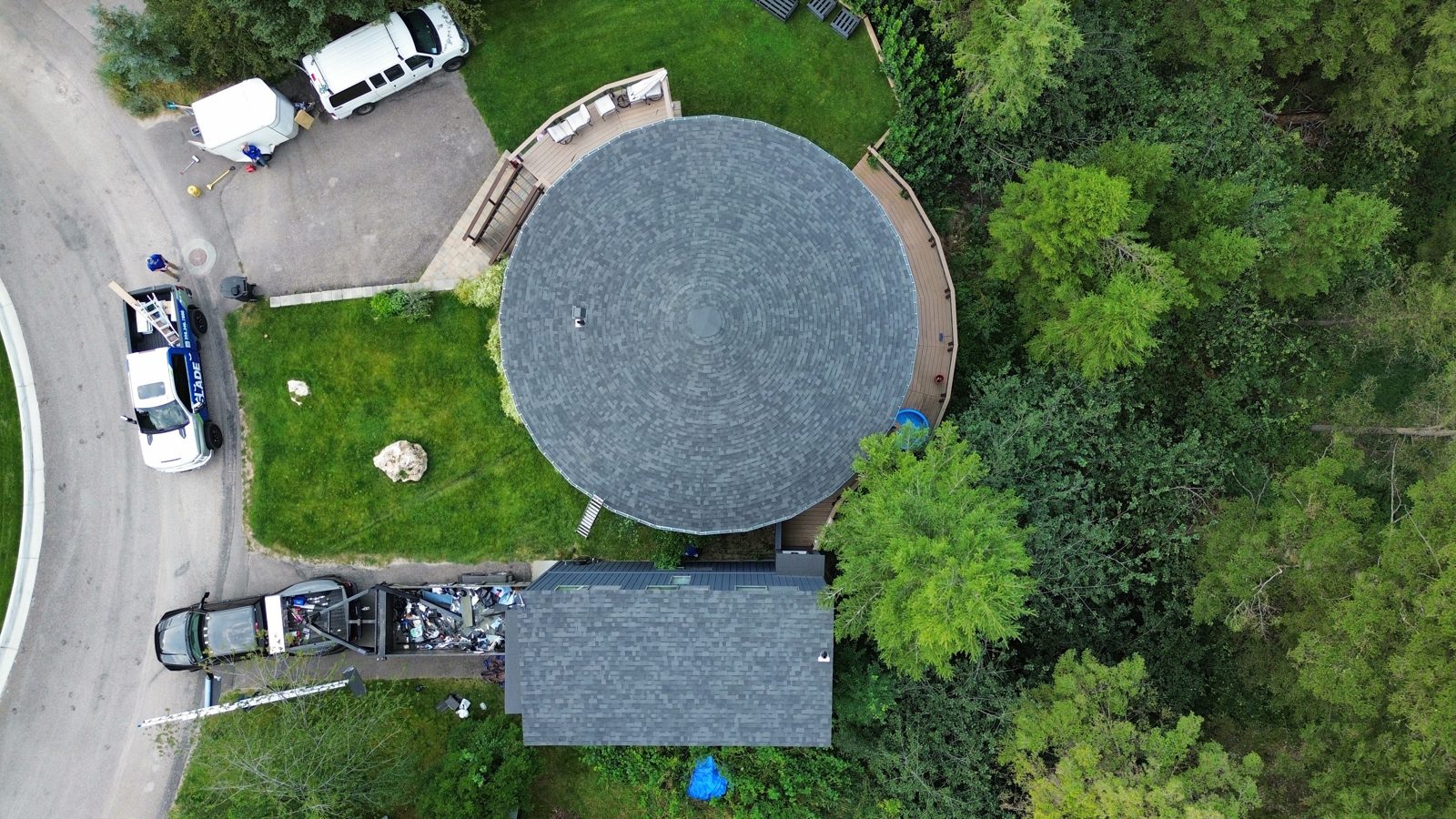
If you live in a hail-prone state, Class 4 impact-resistant shingles are almost always worth the upgrade. They survive the UL 2218 steel-ball test at the highest level, they qualify for insurance discounts that can reach above 20% in certain states like Texas and Oklahoma, and they outlast standard architectural shingles when hail hits. The catch: “Class 4” is a lab rating, not a storm-proof guarantee, and a bad installation can void both the performance and the warranty.
Before you sign anything, run through this short checklist:
- Verify the UL listing. Ask your contractor for the product’s UL file number and confirm it on the UL Product IQ database. A verbal claim is not enough.
- Request the product data sheet. It should show the UL 2218 Class 4 designation, the polymer chemistry (SBS or equivalent), and the wind rating.
- Check your insurance discount. Call your agent before purchase. Discounts vary widely by state and carrier, and some programs require the product to carry both UL 2218 and FM 4473 listings.
- Confirm installer credentials. Ask whether the contractor is manufacturer-certified and carries a workmanship warranty separate from the product warranty.
Class 4 shingles make less sense if your region sees minimal hail, your budget is tight and the premium cannot be offset by insurance savings, or you are already considering a metal or tile roof that carries its own impact ratings.
Table of Contents
- What does a UL 2218 Class 4 rating actually mean?
- How Class 4 shingles are built to survive impact
- Are Class 4 shingles worth the cost?
- How to verify a shingle is genuinely Class 4
- How to choose the right Class 4 shingle for your home
- Why installation quality matters as much as the product
- Key Takeaways
- The part of the Class 4 conversation most contractors skip
- Sladeroof installs verified Class 4 roofs in Idaho, Arizona, and Wyoming
- Useful sources for deeper research
What does a UL 2218 Class 4 rating actually mean?
UL 2218 is the standard test that assigns impact-resistance ratings to roofing materials. Class 4 is the highest level. The test drops a 2-inch steel ball from 20 feet onto the same spot twice. A shingle passes only if neither face shows cracking, splitting, or fracture after both strikes. Classes 1 through 3 use progressively smaller balls dropped from lower heights, so the energy delivered to the shingle increases at each step.
The practical meaning: a Class 4 shingle can absorb the impact energy equivalent to a golf-ball-sized hailstone under controlled lab conditions without rupturing.
“Class 4 is a comparative baseline, not a guarantee. Test methods are controlled and real storms vary — view Class 4 as a fighting chance rather than storm-proof protection.” — CCR Magazine on hail-resistant shingle performance
Real hail is irregular. It comes in odd shapes, at angles, and at velocities the lab does not replicate. A 2-inch hailstone in a 70 mph wind carries more energy than the standardized drop test. Age compounds the gap: IBHS aging research shows that polymer flexibility decreases significantly over time, and a shingle that passed Class 4 on day one may perform closer to a lower class after 10–15 years of UV and thermal cycling.
Pro Tip: When reviewing a product data sheet, look for the UL file number (format: “R” followed by five digits), the test date, and whether the listing is current. An expired or superseded UL file is a red flag. You can cross-check any file number at UL’s public Product iQ database at no cost.
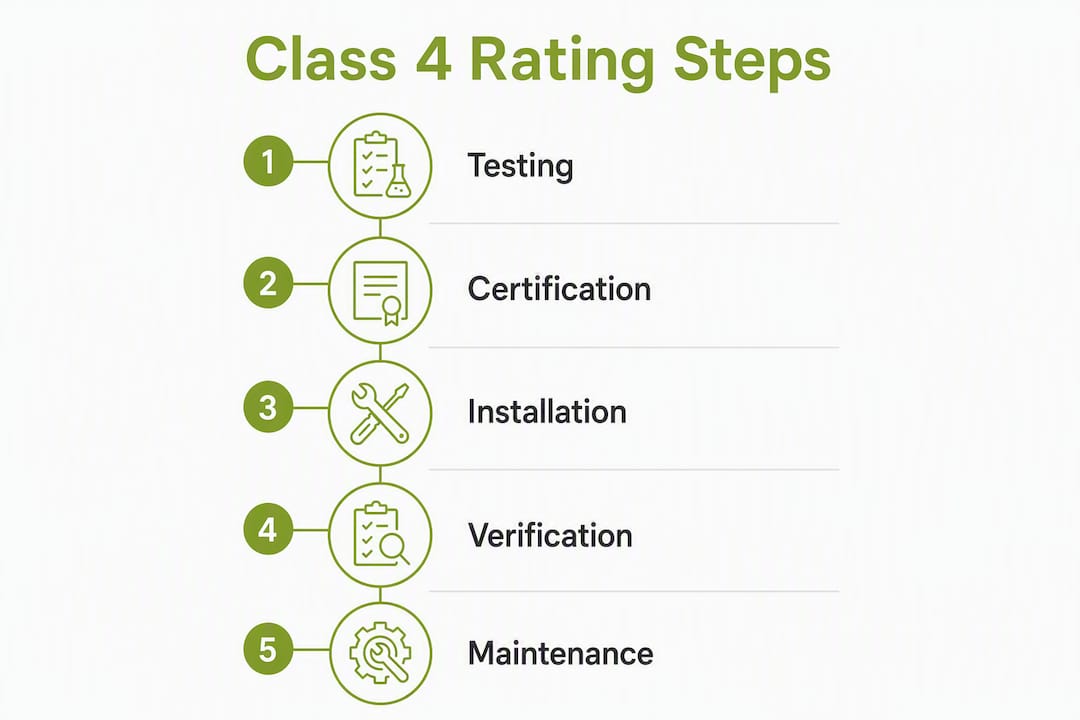
To protect your roof from hail damage effectively, understanding what the rating covers and where it stops is the first step.
How Class 4 shingles are built to survive impact
The rating does not come from thickness alone. It comes from chemistry.
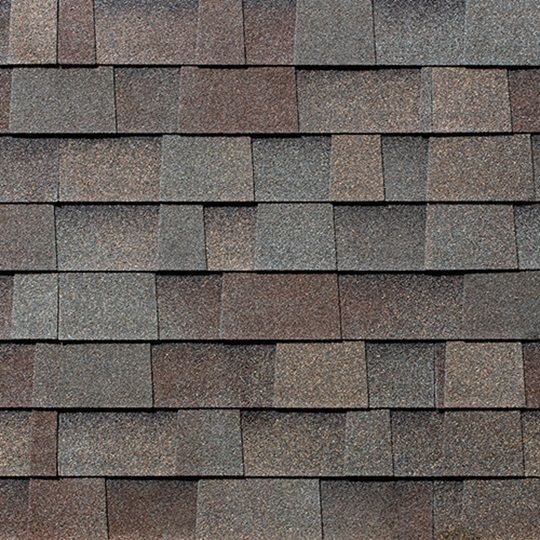
SBS (styrene-butadiene-styrene) polymer-modified asphalt is the dominant approach across most top-rated Class 4 products. SBS acts like a rubber additive in the asphalt matrix, keeping the shingle flexible at low temperatures and elastic under sudden impact. Without it, standard asphalt becomes brittle in cold weather and cracks on contact.
The core construction layers, from top to bottom, look like this:
- Granule layer: ceramic-coated granules bonded with enhanced adhesive chemistry to resist displacement on impact
- Modified asphalt layer: SBS or NEX rubberized asphalt that absorbs and distributes impact energy
- Fiberglass mat or reinforced scrim: the structural backbone; heavier mats resist puncture better
- Back coating: a secondary asphalt layer that seals the mat and adds dimensional stability
Some manufacturers use recycled-rubber blends (marketed under names like NEX® Rubberized Asphalt by Malarkey) rather than virgin SBS. Others add a reinforced fiberglass scrim between asphalt layers for extra puncture resistance. A few older designs used polymer insert plates, but those are largely replaced by full-matrix polymer modification because insert plates can delaminate and are less familiar to most installers.
IBHS testing found that polymer-modified impact-resistant shingles performed roughly 20–50% better than traditional impact-resistant shingles at larger impact locations, making the chemistry choice a meaningful differentiator, not just a marketing claim.
The tradeoff: polymer-modified shingles are heavier than standard architectural shingles. That matters for deck load calculations on older homes. They also cost more per square, and color and texture options can be narrower than standard product lines, though that gap has closed considerably in recent years.
Are Class 4 shingles worth the cost?
For most homeowners in hail-prone states, yes. The math works when insurance discounts offset the premium, and the avoided repair costs add up faster than most people expect.
Who benefits most:
- Homeowners in the central and southern plains states (Texas, Oklahoma, Colorado, Kansas, Nebraska) where hail frequency is highest
- Properties with high wind/hail portions of their insurance policy
- Homeowners planning to stay in the home long enough to capture the payback horizon
- Anyone who has filed a hail claim in the past and wants to reduce future exposure
Realistic benefits:
- Better impact performance than standard architectural shingles in controlled and real-world conditions
- Insurance discounts commonly ranging from 10–15% in some Southeastern states up to 25–35% in Texas and Oklahoma, depending on carrier
- Reduced repair frequency after moderate hail events
- Modest resale value boost in hail-prone markets, where buyers and inspectors recognize the upgrade
The financial break-even commonly occurs within 5–10 years in hail-prone markets when insurance discounts are applied, though discounts are not guaranteed and depend on local carrier rules.
| Cost/Benefit Factor | Typical Range | Notes |
|---|---|---|
| Premium over standard architectural | $30–$80 per square installed | Roughly 10–25% higher than equivalent standard shingles |
| Insurance discount (Texas/Oklahoma) | 25–35% | Verify with your agent; not all carriers participate |
| Insurance discount (Colorado) | 20–25% | Varies by carrier and policy structure |
| Insurance discount (Southeast) | 10–15% | Lower hail frequency reduces discount size |
| Estimated payback horizon | 5–10 years | Faster in high-discount states; slower where discounts are minimal |
Limits to understand before you buy:
- Class 4 shingles are not hail-proof. Very large hail (3 inches or more) can damage any asphalt shingle.
- Performance degrades with age. UV exposure and thermal cycling reduce polymer flexibility over 10–15 years.
- The premium is real. On a 25-square roof, a premium adds a significant amount to the installed cost.
- Insurance discounts are not automatic. Some carriers require specific product listings or a formal inspection before applying the discount.
For a deeper look at why high-quality shingles are worth the investment, the long-term cost picture is more favorable than the upfront premium suggests.
How to verify a shingle is genuinely Class 4
The label on the bundle is not enough. Verification takes three minutes and protects you from products that claim Class 4 without a current, valid listing.
Verification checklist:
- UL file number: Ask the contractor or manufacturer for the UL 2218 file number. Cross-check it at UL’s Product iQ database (productiq.ul.com). Confirm the listing is active and covers the specific product being installed, not just a related product line.
- Product data sheet: The data sheet should explicitly state “UL 2218 Class 4” and list the file number. If it says “impact-resistant” without a class designation, that is not a Class 4 product.
- FM 4473 listing (optional but valuable): Some insurers accept FM 4473 ice-ball testing as an alternate standard. If your carrier recognizes FM 4473, ask whether the product carries that listing in addition to UL 2218, as it may affect your discount eligibility.
- Installation instructions: Confirm the instructions specify the nail pattern required to maintain both the impact rating and the wind rating. A 6-nail pattern is required for higher wind ratings on many products.
- Polymer chemistry callout: The data sheet should name the modifier (SBS, NEX, rubberized asphalt, or equivalent). A vague “modified asphalt” with no chemistry detail is worth questioning.
Questions to ask your contractor:
- Can you show me the UL file number for this specific product?
- Does the product also carry an FM 4473 listing?
- What nail pattern does the manufacturer require for the wind rating?
- What workmanship warranty do you provide, separate from the product warranty?
Red flags:
- Contractor cannot produce a product data sheet or UL file on request
- Proposal lists a product by a generic name without a manufacturer model number
- Unusually low bid with no explanation of which product is being installed
- Contractor suggests substituting a different product at the job site without written documentation
For a full list of questions to ask before hiring a roofer, Sladeroof has a practical guide that covers contractor vetting beyond just product verification.
How to choose the right Class 4 shingle for your home
The performance differences between top-rated Class 4 products are smaller than the marketing suggests. Most premium Class 4 lines share SBS or equivalent polymer-modified chemistry, and the real differentiators are installer familiarity, regional availability, warranty structure, and price. Pick the product your chosen contractor knows well and can warranty confidently.
Decision criteria, in priority order:
- Installer familiarity and certification. A contractor who installs a specific product line regularly knows the nail patterns, the accessory requirements, and the warranty claim process. That knowledge matters more than a marginal performance difference between brands.
- Warranty structure. Understand the difference between a limited lifetime product warranty and a full-system warranty that includes workmanship. Some manufacturers offer enhanced warranties only through certified contractors.
- Wind rating. Class 4 impact rating and wind rating are separate. Confirm the product’s wind rating matches your local building code requirement, and verify the nail pattern required to achieve it.
- Regional availability. Not every product is stocked in every market. A product your contractor cannot reliably source leads to delays and substitutions.
- Color and texture match. If you are replacing part of a roof, color match matters. Check the manufacturer’s current color palette before committing.
- Price premium. Compare installed cost, not just material cost. Labor, accessories, and underlayment add up differently by product.
Comparison framework: what to check on the product sheet and contract
| Criteria | What to look for |
|---|---|
| Impact rating | UL 2218 Class 4 designation with active file number |
| Wind rating | MPH rating and required nail pattern (4-nail vs. 6-nail) |
| Polymer chemistry | SBS, NEX, or named rubberized asphalt modifier |
| Product warranty | Limited lifetime vs. enhanced/system warranty; transferability |
| Workmanship warranty | Separate from product; provided by contractor or manufacturer |
| Contractor certification | Manufacturer-certified installer status |
Numbered questions to ask your contractor before signing:
- Are you certified by the manufacturer for this product line?
- What is the wind rating, and what nail pattern achieves it?
- What does your workmanship warranty cover, and for how long?
- How do you document the installation for future insurance claims?
- What accessories (underlayment, starter, ridge cap) does the manufacturer require to maintain the warranty?
Red flags in contractor proposals:
- No manufacturer model number on the proposal, just “Class 4 shingles”
- Vague warranty language (“we stand behind our work”) with no written terms
- No mention of required accessories or underlayment
- Bid significantly below others with no explanation
Why installation quality matters as much as the product
A Class 4 shingle installed incorrectly performs like a standard shingle. The product warranty and the impact rating both depend on the installation meeting the manufacturer’s specifications exactly.
Critical installation steps a professional must follow
Correct underlayment selection is the first variable most homeowners overlook. The manufacturer’s installation instructions specify the underlayment type required to maintain the warranty. Using a non-specified underlayment can void coverage even if the shingles themselves are installed perfectly.
Ventilation affects long-term performance more than most people realize. Poor attic ventilation accelerates the thermal cycling that degrades polymer flexibility. Proper ventilation, correct underlayment, and professional installation extend real-world impact resistance and help the shingle maintain its protective properties longer. Sladeroof’s installation process includes a ventilation assessment before the job starts, not after.
Nail pattern is non-negotiable for wind rating. Many Class 4 products require a 6-nail pattern to achieve their rated wind resistance. A 4-nail installation on a product requiring 6 nails can void the wind warranty and reduce uplift resistance in a storm.
Flashing, starter strips, and hip/ridge installation are where shortcuts show up in claims. Improper flashing is the leading cause of leak claims on otherwise sound roofs. A professional installer documents flashing details with photos before the next layer goes on.
Warranty structure: product vs. workmanship
The product warranty covers manufacturing defects. It does not cover installation errors. The workmanship warranty, provided by the contractor, covers installation quality. These are two separate documents, and you need both.
Certified applicators often unlock enhanced manufacturer warranties that combine product and workmanship coverage into a single system warranty. That single document simplifies the claims process considerably when something goes wrong.
“Installation quality is the variable that separates a Class 4 roof that performs for 30 years from one that fails a warranty claim after the first major storm. The product is only as good as the hands that put it on.” — Sladeroof installation standards
Pro Tip: Ask your contractor to provide installation photos at three stages: deck inspection before underlayment, underlayment and flashing before shingles, and completed ridge and hip installation. These photos are your evidence if an insurance claim is disputed later. Sladeroof documents all three stages as standard practice.
For more on extending your roof’s warranty through proper maintenance, small actions after installation preserve the performance the product was built to deliver.
Key Takeaways
Class 4 shingles are worth the premium in hail-prone regions, but only when you verify the UL listing, choose a certified installer, and confirm your insurance discount before purchase.
| Point | Details |
|---|---|
| Verify the UL listing | Request the UL 2218 file number and confirm it is active at UL Product iQ before signing a contract. |
| Understand the cost premium | Installed cost runs $30–$80 per square above standard architectural shingles, roughly a 10–25% premium. |
| Insurance discounts vary widely; the amount depends on your state and carrier, so confirm with your agent. | |
| Performance degrades over time | Polymer flexibility declines after 10–15 years of UV and thermal exposure, reducing effective impact resistance. |
| Sladeroof installs and documents | Sladeroof provides Class 4 installation with photo documentation, workmanship warranties, and insurance claim assistance in Idaho, Arizona, and Wyoming. |
The part of the Class 4 conversation most contractors skip
Most homeowners walk away from a Class 4 shingle conversation knowing the rating and the price premium. What they rarely hear is the aging curve.
A shingle that earns a Class 4 rating on day one is not a Class 4 shingle forever. IBHS research is clear that polymer embrittlement from UV and thermal cycling degrades impact resistance over time. By year 10–15, a shingle that passed Class 4 testing when new may absorb impact more like a Class 2 or 3 product. That does not make Class 4 a bad investment. It makes it a time-limited one, which changes how you should think about maintenance, inspection frequency, and when to plan your next replacement.
The other thing worth saying plainly: the insurance discount is the financial engine of this upgrade in most markets. Without it, the payback math gets much harder. That means the discount conversation with your insurer should happen before you choose a product, not after. Some carriers require specific product listings, some require an inspection, and some have stopped offering the discount in certain zip codes due to claim frequency. Knowing that before you install saves real money.
Sladeroof’s approach, built over 20 years of working at the intersection of roofing and insurance, is to treat the discount verification as part of the pre-installation process. The product selection follows the insurance conversation, not the other way around. That sequence is what separates a roof that pays for itself from one that just looks good on paper.
Sladeroof installs verified Class 4 roofs in Idaho, Arizona, and Wyoming
Most roofing contractors will sell you a Class 4 shingle. Fewer will verify the UL listing, document the installation for your insurer, and help you navigate the claims process if a storm hits. Sladeroof does all three.
With over 20 years of combined roofing and insurance experience, Sladeroof installs impact-resistant roofing systems for residential and commercial properties across Idaho, Arizona, and Wyoming. Every installation includes a pre-job deck inspection, photo documentation at critical stages, and a 25-year leak warranty backed by a 50-year product warranty. Sladeroof also provides insurance claim assistance when storm damage occurs, so you are not navigating the adjuster process alone.
Ready to get a quote or schedule a roof inspection? Visit Sladeroof’s residential roofing page to request a consultation. Confirm product availability and color options for your specific location during the quoting process.
Useful sources for deeper research
-
UL 2218 Class 4 definition and test parameters — The Roofing Brief: Covers the steel-ball test method, Class 1–4 scale, FM 4473 alternate standard, and typical insurance discount ranges by state. Good starting point for understanding what the rating means and how to verify it.
-
IBHS shingle performance ratings: The Insurance Institute for Business and Home Safety publishes independent research on shingle impact performance, including polymer-modified vs. traditional IR shingle comparisons. Authoritative source for real-world performance context.
-
IBHS polymer-modified shingle testing (PDF): The primary research document showing how polymer-modified shingles outperform traditional IR shingles in controlled impact testing. Use this to evaluate manufacturer chemistry claims.
-
Impact-resistant shingles guide — ShinglesCalculator: Practical guide covering SBS chemistry, major product lines, insurance discount ranges by state, and cost premium data. Useful for homeowners comparing products and estimating payback.
-
Do hail-resistant shingles perform as their ratings claim? — CCR Magazine: Covers aging effects on impact resistance, IBHS aging study findings, and the gap between lab ratings and real-world storm performance. Essential reading before assuming Class 4 is a permanent guarantee.
-
III hail statistics: The Insurance Information Institute’s hail loss data by state and year. Useful for understanding regional hail risk and why discount ranges vary so much by geography.
-
Sladeroof residential roofing services: Service page for residential roof inspections, installations, and warranty details in Idaho, Arizona, and Wyoming.
-
Sladeroof insurance claim assistance: Details on how Sladeroof supports homeowners through the insurance claim process after storm damage.
Recommended
Ready for a real answer on your roof?
Slade Roofing pairs licensed insurance agents with licensed roofers. Get your free inspection in about 30 seconds.
Get My Free Inspection →