Class 4 Shingles: Are They Worth It for Hail-Prone Homes?
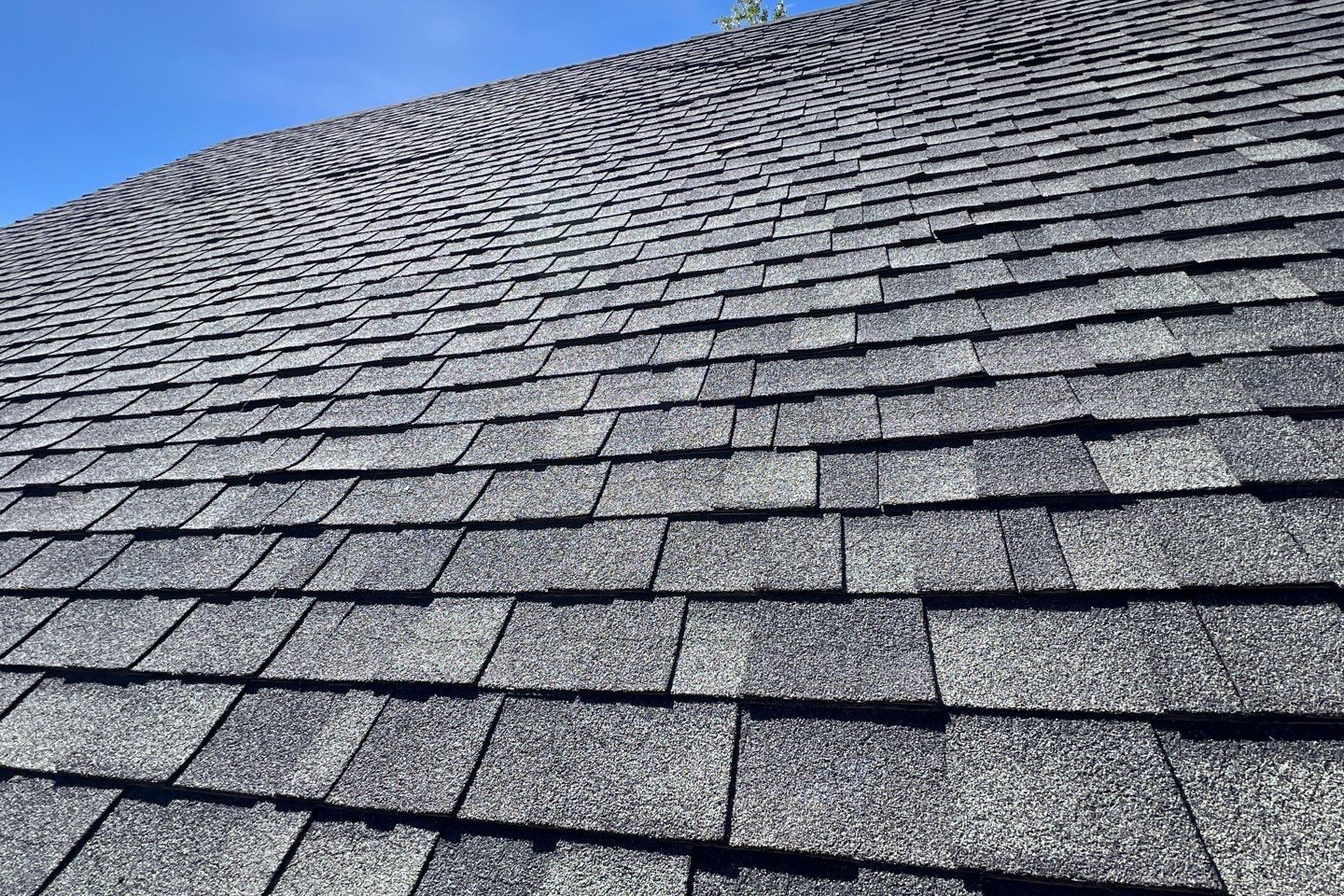
Class 4 shingles are worth the upgrade if you live in a hail-prone state, plan to stay in your home more than a few years, and want a shot at an insurance discount. UL 2218 Class 4 is the highest impact rating a shingle can earn, the installed premium usually runs modest compared with standard architectural shingles, and several states offer real insurance discounts for carrying them. None of that means your roof becomes hail-proof.
Here’s the honest breakdown before you spend another dollar researching this:
- Who benefits most: homeowners in hail corridors (Texas, Oklahoma, Colorado, Nebraska, parts of the Mountain West), anyone whose insurer offers a documented discount, and people planning to own the home long enough to recoup the upgrade cost.
- What you’re buying: a shingle that passed a standardized impact test without cracking, not a guarantee against every storm.
- What it costs: typically $30 to $80 more per square installed than a comparable architectural shingle, depending on brand and roof complexity.
- What it won’t do: stop damage from a monster hailstorm with baseball-sized stones hitting at a steep angle.
Class 4 doesn’t mean invincible. It means your roof cleared the toughest lab test the industry has, which correlates with fewer cracked shingles in the kind of hail that actually hits most American roofs.
If your ZIP code sees hail every year and your insurer will knock a chunk off your premium for choosing Class 4, the math almost always works in your favor. If you live somewhere hail is rare and no discount is on the table, the upgrade is still smart insurance against the freak storm, just a less urgent one.
Key Takeaways
Class 4 shingles reduce the likelihood of hail-related cracking and often qualify for insurance discounts, but only when the product is properly certified and correctly installed.
| Point | Details |
|---|---|
| Class 4 is a UL 2218 rating | It’s the highest impact-resistance tier, tested with a two-inch steel ball dropped from 20 feet. |
| Cost premium is modest | Expect roughly $30 to $80 more per square installed versus standard architectural shingles. |
| Insurance discounts vary by state | Some states, including Texas and Oklahoma, offer discounts of 25 to 35 percent; others offer far less. |
| Installation quality decides real-world performance | Nailing pattern, underlayment, and flashing details determine whether the rating holds up in practice. |
| Verify before you sign | Confirm product wrappers, spec sheets, and insurance qualification language, or work with Slade Roofing to document everything correctly from inspection through installation. |
Table of Contents
- What Does Class 4 Mean and How Does the UL 2218 Test Work?
- How Do Manufacturers Actually Make Shingles Impact-Resistant?
- Class 3 vs. Class 4 Shingles: What Changes and When It Matters
- How Do Class 4 Shingles Perform in Real Storms, and What Does That Mean for Insurance?
- What Do Class 4 Shingles Cost, and What Should the Warranty Cover?
- How Do You Confirm a Roof Is Actually Class 4?
- Why Installation Quality Determines Whether Class 4 Actually Performs
- Is Class 4 Worth It for Your Home? A Quick Checklist
- A Publisher’s Perspective on Class 4 Shingles
- How Slade Roofing Helps You Get Class 4 Right
- Sources
What Does Class 4 Mean and How Does the UL 2218 Test Work?
Class 4 is a rating, not a brand or a marketing term. It comes from UL 2218, the industry standard test that Underwriters Laboratories developed to measure how steep-slope roofing materials hold up against impact. Roofing manufacturers submit shingles to accredited labs, and UL assigns a class from 1 to 4 based on how the material performs. Class 4 is the top tier.
The test itself is straightforward once you strip away the engineering language. A steel ball, two inches in diameter, gets dropped from 20 feet onto the shingle sample. That drop height is calibrated to simulate the kinetic energy of a large hailstone hitting a roof at terminal velocity. Testers strike multiple spots on each sample, then flip the shingle over and inspect the back side.
Passing means no cracking, splitting, or rupture visible on the underside of the shingle. A shingle can show a dent or a minor mark on the surface and still pass. What fails a sample is any break that goes through the mat, because that’s the point at which water and future hail strikes can compromise the roof underneath.
That distinction between cosmetic and structural damage matters more than most homeowners realize. A Class 4 roof can look a little dinged up after a bad storm and still be doing exactly what it’s supposed to do. The test also has a real limitation worth knowing upfront: it’s a controlled lab simulation using a uniform steel ball, not actual ice. Real hail varies wildly in shape, density, and impact angle, which is part of why insurers and engineers treat UL 2218 as a strong predictor of performance rather than a guarantee.
How Do Manufacturers Actually Make Shingles Impact-Resistant?
The short answer is chemistry, not magic. Most Class 4 asphalt shingles get their resilience from polymer-modified asphalt, most commonly SBS (styrene-butadiene-styrene), a rubber-like additive blended into the asphalt coating. Standard asphalt is stiff and somewhat brittle, especially in cold weather, which is exactly when a lot of hailstorms hit. SBS-modified asphalt behaves more like a flexible membrane. When a hailstone strikes, the shingle flexes and absorbs energy instead of cracking outright.
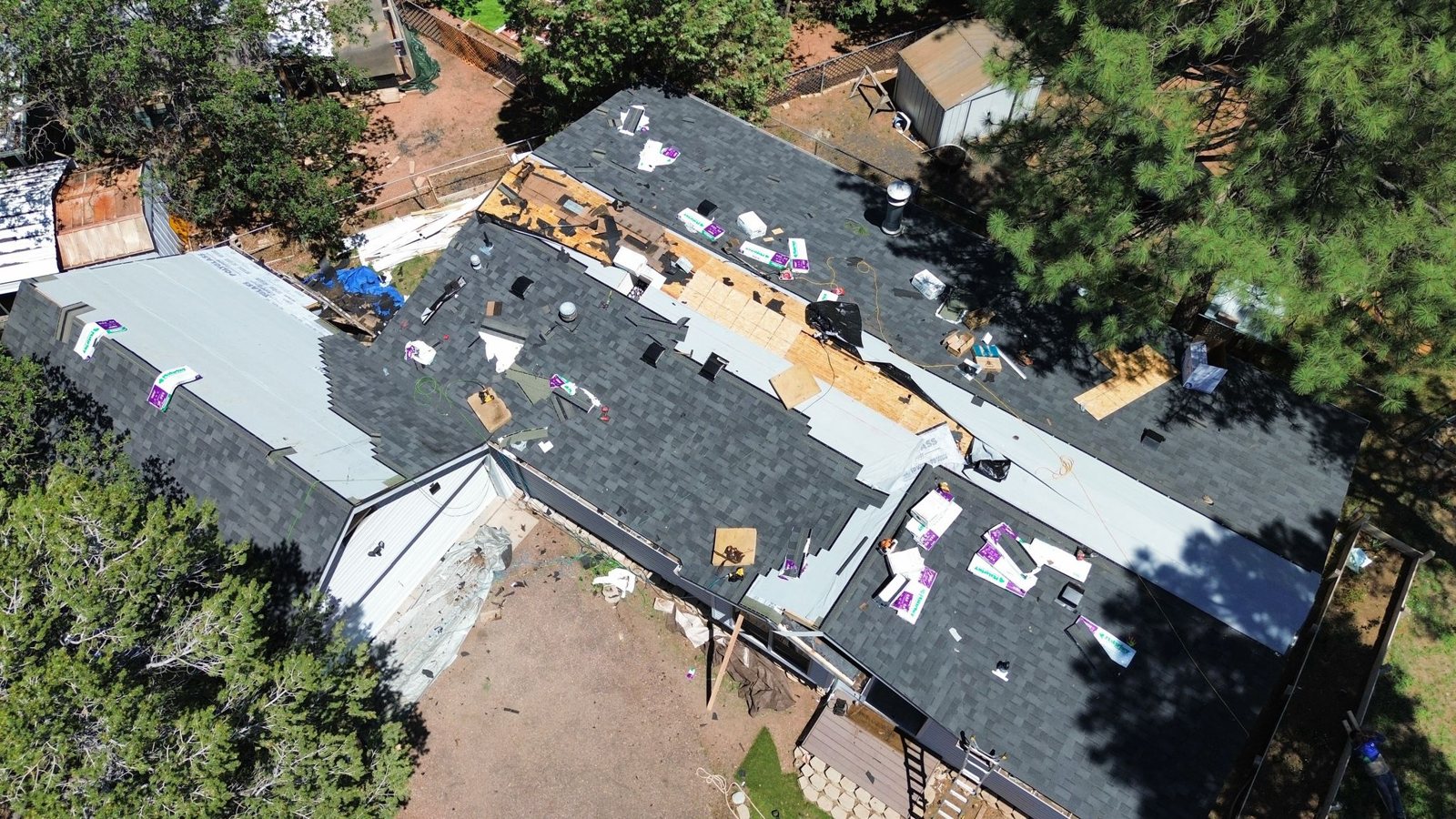
That’s the core mechanism behind nearly every residential Class 4 product on the market, whether it comes from GAF, Owens Corning, or another major manufacturer. The differences between brands tend to show up in warranty terms, distribution networks, and installation requirements rather than in the underlying chemistry.
A few construction details separate a genuinely impact-resistant shingle from a standard one on the spec sheet:
- Reinforced fiberglass mat: a heavier, more tightly woven mat gives the shingle a stronger skeleton beneath the asphalt coating.
- Polymer-modified asphalt: SBS or similar modifiers add flexibility that resists cracking under impact.
- Enhanced adhesive strips: stronger sealant helps keep shingles bonded to the roof deck during wind-driven hail, which matters because a loose shingle takes a harder hit.
- Granule embedment: better granule adhesion protects the asphalt coating underneath from abrasion during a hailstorm.
When you’re comparing products, look for three things on the spec sheet: an explicit UL 2218 Class 4 listing, the manufacturer’s own published list of Class 4 products (both GAF and Owens Corning maintain these), and language tying the impact rating to a specific warranty tier. If a shingle is marketed as “impact resistant” without a UL 2218 Class 4 citation, ask your contractor for the actual test documentation before assuming it qualifies for insurance discounts.
Class 3 vs. Class 4 Shingles: What Changes and When It Matters
Class 3 and Class 4 both pass the UL 2218 test, but Class 3 allows for a slightly lower threshold of impact resistance in the test parameters. In practice, the gap between the two shows up most in how a roof handles repeated or larger-diameter hail impacts, not in day-to-day weather.
| Comparison Dimension | Class 3 Shingles | Class 4 Shingles |
|---|---|---|
| UL 2218 test parameters | Passes at a lower impact threshold | Passes at the highest impact threshold available |
| Real-world hail resistance | Solid protection against light to moderate hail | Stronger resistance to cracking, especially with SBS-modified formulations |
| Typical cost premium per square | Minimal to none over standard architectural shingles | $30 to $80 more per square than standard shingles |
| Warranty differences | Standard manufacturer warranty terms | Often paired with extended or enhanced impact warranty coverage |
| System compatibility | Compatible with most standard wind ratings and underlayments | May require specific nailing patterns or underlayment for full warranty and insurance qualification |
If you live somewhere hail is an occasional nuisance rather than an annual event, Class 3 shingles still give you meaningful protection at a lower cost. The upgrade to Class 4 starts paying for itself in two scenarios: you’re in a region with frequent, large-diameter hail, or your insurance carrier offers a discount specifically tied to Class 4 certification.
Run the numbers before deciding. A $30 to $80 per square premium on a typical 2,000 square foot roof (about 20 squares) adds up to somewhere between $600 and $1,600 over the cost of standard architectural shingles. If your insurer offers even a modest annual discount for Class 4 roofing, that gap often closes within a handful of years, and the shingles usually keep outperforming Class 3 for the rest of the roof’s life.
How Do Class 4 Shingles Perform in Real Storms, and What Does That Mean for Insurance?
Hail isn’t a rare event in large parts of the country. NOAA’s Storm Prediction Center tracks severe weather reports every year, and the data consistently shows a hail corridor running through the Great Plains, Texas, Oklahoma, and up through parts of the Midwest and Mountain West, where large hail events happen with enough regularity that insurers price it into premiums.
IBHS testing on relative impact resistance backs up what the UL 2218 test suggests in the lab: shingles built with impact-resistant technology crack less often under controlled impact than standard architectural shingles hit at the same force. That’s a meaningful, well-supported signal, not a guarantee.
A Class 4 roof reduces your odds of a cracked shingle in a typical hailstorm. It does not remove the possibility entirely, especially when hailstones exceed the two-inch steel ball used in the UL 2218 test.
Research into atmospheric conditions that produce large hail shows certain regions regularly generate hailstones well beyond golf-ball size, Phys. When stones get that large, even a Class 4 roof can sustain damage, though the frequency and severity of that damage still tends to run lower than on a standard roof hit by the same storm.
Hail is also not a minor line item for insurers. The Insurance Information Institute tracks hail as a consistent and significant driver of homeowners insurance claims nationwide, which is exactly why so many carriers now offer premium discounts for verified Class 4 roofing.
Those discounts vary widely by state and carrier. Texas and Oklahoma insurers commonly offer discounts in the 25 to 35 percent range for documented Class 4 roofs, reflecting how much hail risk those states carry. Other states offer smaller discounts, and some carriers don’t offer one at all. Before you assume you’ll save money, call your insurance agent and ask specifically what rating standard they require. Some carriers accept UL 2218, others recognize FM Approvals 4473, a similar impact test that uses ice balls instead of steel, and language between the two isn’t always interchangeable in a policy.
What Do Class 4 Shingles Cost, and What Should the Warranty Cover?
Budget planning starts with realistic numbers, not vague ranges pulled from a sales pitch. Industry price data puts the material premium for Class 4 shingles at roughly $30 to $80 more per square installed compared with standard architectural shingles. On a typical single-family roof, that translates to a total project premium in the low thousands, not tens of thousands.
Several factors move that number up or down. Roof complexity (steep pitches, multiple valleys, dormers) adds labor hours regardless of shingle type, but it compounds the cost difference since more squares means more of the per-square premium. Tear-off and disposal fees, permit costs, and any structural repairs uncovered during the job all sit on top of the shingle cost itself. Detailed cost breakdowns show labor typically makes up close to half the total project cost, which is why getting quotes from more than one contractor matters as much as picking the right shingle.
Lifespan is where the polymer modification pays a second dividend. SBS-modified shingles tend to resist the granule loss and surface cracking that comes from ordinary weathering, not just hail impact, which is part of why many Class 4 products carry warranties as long as 50 years on materials.
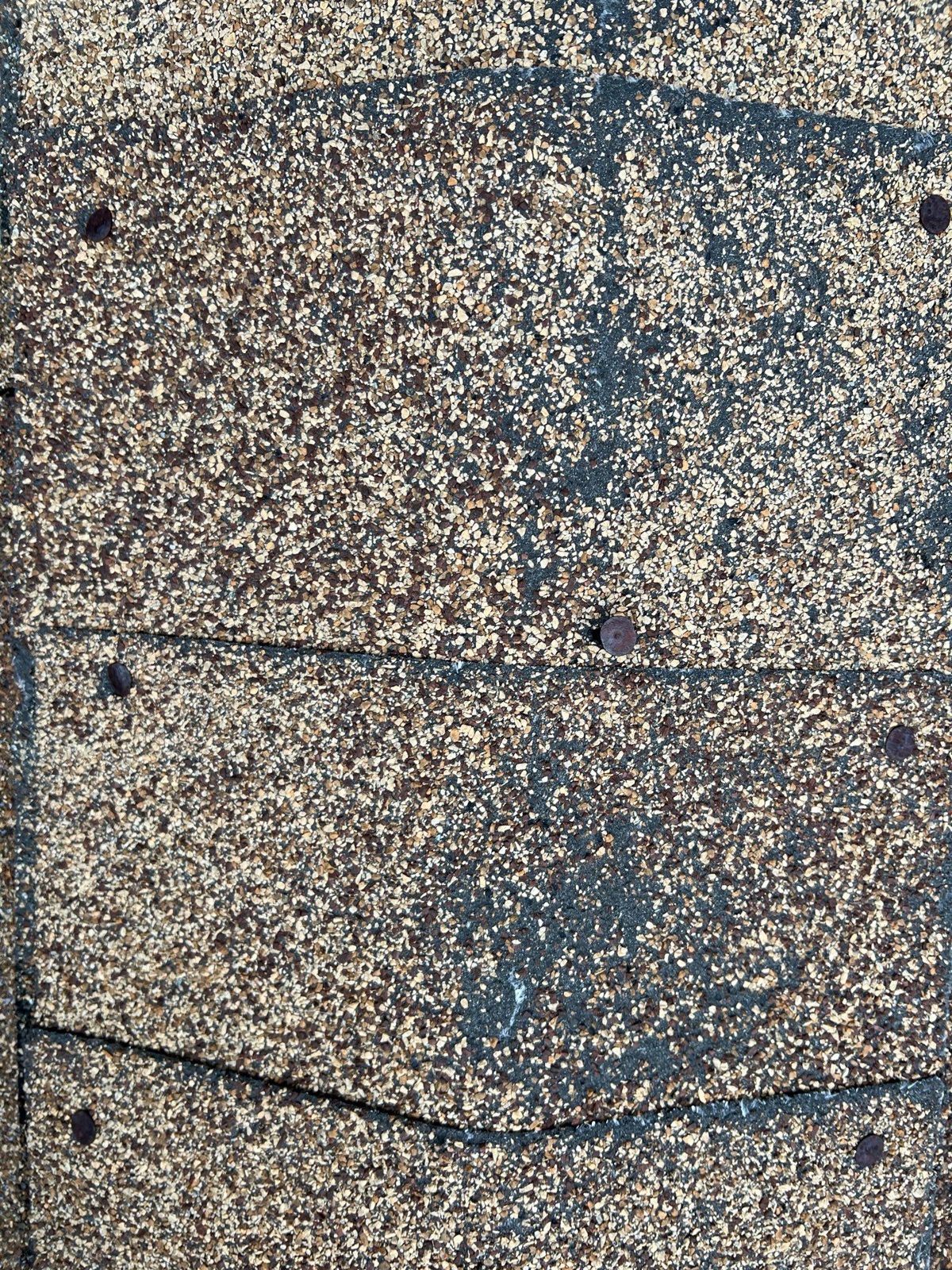
Warranty language deserves careful reading before you sign anything. Look for four things specifically: how long the impact-resistance warranty lasts (sometimes shorter than the general product warranty), whether coverage is prorated after a certain number of years, what the workmanship warranty covers separately from the manufacturer’s material warranty, and whether a leak warranty is included and for how long. A strong roofing warranty package typically separates these categories clearly rather than bundling them into one vague guarantee.
Pro Tip: Get the manufacturer’s product spec sheet and the full written warranty terms attached to your contract, not just referenced in it. Verbal promises about coverage don’t hold up if you ever need to file a claim.
How Do You Confirm a Roof Is Actually Class 4?
Plenty of roofs get marketed as “impact resistant” without ever carrying an actual UL 2218 Class 4 listing. Verifying the claim takes about ten minutes and can save you from a denied insurance discount later.
- Check the shingle wrapper. Every legitimate Class 4 product ships with UL 2218 Class 4 certification printed directly on the packaging. If your contractor can’t produce a wrapper or photo of one, that’s a red flag.
- Request the manufacturer’s product data sheet. This document lists the exact product name, UL rating, and often a link to the manufacturer’s published Class 4 product list, which both GAF and Owens Corning maintain publicly.
- Confirm the spec is written into your contract. The exact product name and Class 4 designation should appear in the signed agreement, not just discussed verbally during the sales visit.
- Ask for installation photos. Photos of the shingle wrappers on-site, along with underlayment and nailing pattern, give you documentation if you ever need to prove system compliance for an insurance claim.
- Hold final payment until documentation is delivered. If the wrapper photos, product ID, and spec sheet aren’t in hand by the time the crew finishes, don’t release the last payment until they are.
If you already have a roof installed and don’t know what you’re working with, ask your contractor or the original installer for the product model number, then look it up on the manufacturer’s site. Most manufacturers list Class 4 products by name, so a quick search settles the question in minutes.
Why Installation Quality Determines Whether Class 4 Actually Performs
A Class 4 shingle installed poorly performs like a lesser shingle installed well, sometimes worse. The rating measures the product in a lab. What happens on your roof depends heavily on the installer.
Several installation details make or break both storm performance and insurance eligibility. Nailing pattern matters more than most homeowners assume: many manufacturers require a six-nail pattern rather than the standard four-nail pattern to maintain both wind and impact warranties, and skipping that step can void coverage even if the shingle itself is genuinely Class 4. Synthetic underlayment and ice-and-water shield add a second line of defense if a shingle does crack, keeping water out of the deck. Flashing details around chimneys, vents, and valleys are where most leaks actually originate, regardless of how good the shingle is.
A Class 4 shingle nailed with the wrong pattern, on the wrong underlayment, isn’t really a Class 4 roof anymore. It’s a Class 4 product installed as if it were something cheaper.
Before hiring anyone, ask a contractor to show you photos of a completed Class 4 job, confirm in writing which nailing pattern they use, and request the manufacturer installation instructions for the specific product they’re proposing. Walk away from any contractor who can’t produce a product spec sheet, has no installation photos from past jobs, uses an inconsistent nailing pattern from job to job, or hesitates to put warranty terms in writing. Slade Roofing built its process around exactly these gaps, pairing over 20 years of combined roofing and insurance experience with documented installations designed to hold up to both weather and underwriting review. That combination, contractors who understand both the roofing side and the insurance side, is rarer than it should be, and it’s often the difference between a claim that gets approved smoothly and one that gets delayed over missing paperwork.
Pro Tip: If you’re planning solar panels alongside a roof replacement, confirm your shingle choice is rated for solar mounting compatibility before installation, since retrofitting panels onto an already-installed roof can complicate warranty coverage on both systems.
Is Class 4 Worth It for Your Home? A Quick Checklist
Run through these questions before you commit to a bid:
- Does your ZIP code see hail regularly? Check NOAA’s Storm Prediction Center data or ask your insurance agent about local hail claim history.
- How old is your current roof? If you’re within a few years of needing replacement anyway, the incremental cost of upgrading to Class 4 during that replacement is far lower than doing it as a standalone project later.
- Will your insurer actually give you a discount? Call and ask specifically about Class 4 or impact-resistant roofing discounts before assuming one applies.
- How long do you plan to stay in the home? The cost premium pays back faster the longer you own the house.
- Have you gotten at least two quotes with written warranty terms? Compare not just price but nailing pattern, underlayment, and what’s documented for insurance purposes.
- Has someone verified the insurance discount in writing before you sign a contract? Don’t rely on a contractor’s assumption. Get it from your carrier directly.
If you check most of these boxes, the upgrade to Class 4 is one of the more straightforward home improvement decisions you’ll make this year, small added cost, real added protection, and a plausible ongoing discount on your premium.
A Publisher’s Perspective on Class 4 Shingles
The conventional pitch on Class 4 shingles treats the UL 2218 rating like it’s the whole story. It isn’t. The rating tells you a product passed a specific lab test. Whether that translates into fewer roof problems on your actual house depends on your region, your insurer’s specific qualification language, and, more than anything else, whether the crew on your roof installed it the way the manufacturer specifies.
We’ve seen the insurance-side savings play out in ways that surprise homeowners who expected a modest discount and got a meaningful one, particularly in hail corridor states where carriers have strong financial incentive to reward impact-resistant roofing. We’ve also seen the opposite: a homeowner who paid for Class 4 shingles but got a four-nail installation on a product that required six, which put both the manufacturer warranty and the insurance discount at risk before a single storm ever hit.
The honest reminder here is simple. Class 4 shifts the odds in your favor. It doesn’t eliminate risk. If a severe hailstorm drops stones larger than what the UL 2218 test simulates, your roof can still take damage, Class 4 or not. Go into this upgrade expecting better odds, not a guarantee, and you’ll make a clearer-eyed decision.
How Slade Roofing Helps You Get Class 4 Right
If you’ve made it this far, you already know Class 4 shingles only deliver on their promise when the product, the paperwork, and the installation all line up. That’s the exact gap Slade Roofing was built to close. With more than 20 years of combined roofing and insurance experience, Slade Roofing handles inspection, Class 4 installation, warranty documentation, and insurance-claim assistance as one connected process instead of three separate headaches.
A typical first visit starts with a full roof inspection to assess your current condition and hail exposure, followed by a written estimate that specifies the exact Class 4 product, nailing pattern, and warranty terms before any work begins. If you’re already dealing with storm damage, Slade Roofing also guides you through the insurance claims process so the paperwork supports your discount and coverage instead of putting it at risk. Homeowners in Idaho, Arizona, and Wyoming can schedule an inspection through Slade Roofing’s residential roofing services to get a clear, documented answer on whether Class 4 makes sense for their specific roof and insurance situation, before committing to anything.
Sources
Homeowners who want to dig deeper into the standards and data behind this article can check these sources directly.
- Relative impact resistance of asphalt shingles (IBHS)
- SPC annual summary (NOAA/Storm Prediction Center)
- Facts & Statistics — Hail (Insurance Information Institute)
Recommended
Ready for a real answer on your roof?
Slade Roofing pairs licensed insurance agents with licensed roofers. Get your free inspection in about 30 seconds.
Get My Free Inspection →