What Does a Metal Roof Warranty Actually Cover?
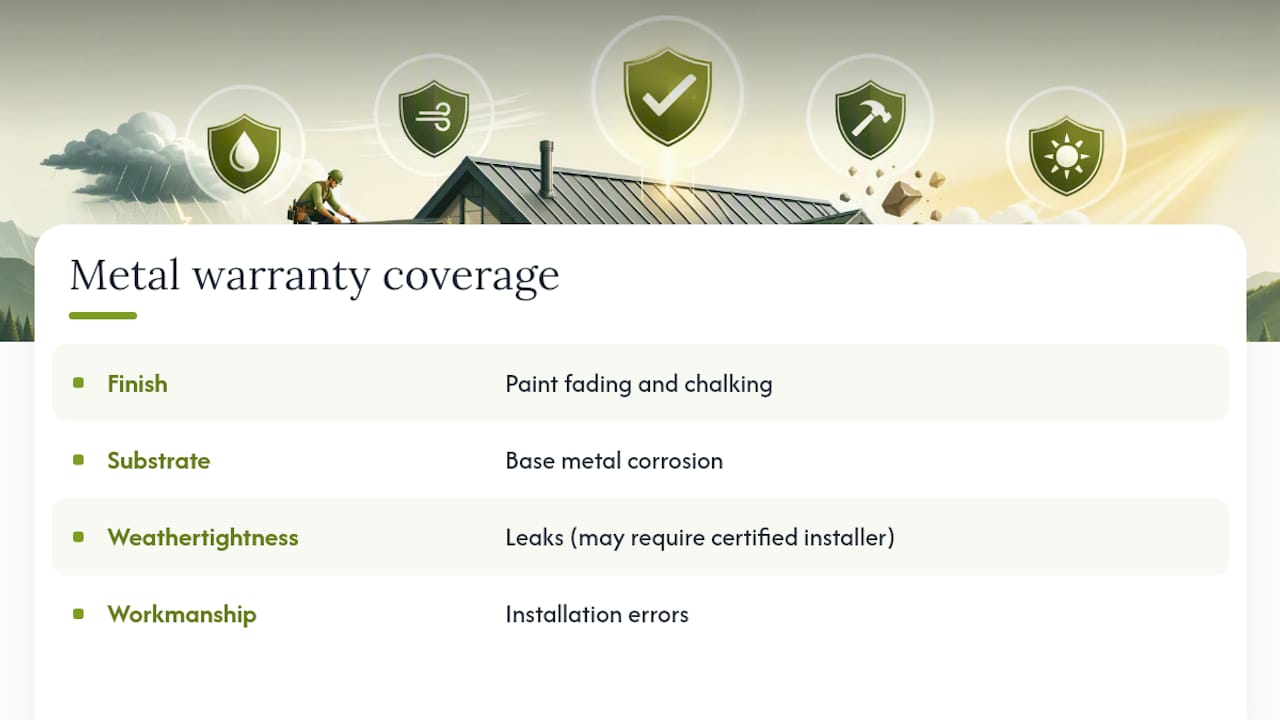
A metal roof warranty typically bundles four separate protections: finish, substrate, weathertightness, and workmanship, each with its own issuer and term length. The finish and substrate portions usually come from the manufacturer, while the weathertightness and workmanship pieces often depend on your installer’s certification status. Before you assume your roof is “covered,” check these four things:
- Who issued it — manufacturer, installer, or both jointly
- The term length for each category (they rarely match)
- Whether your installer was certified by the panel manufacturer
- Whether you registered the warranty within the required window
Sample documents from manufacturers like Sheffield Metals, McElroy, and AEP Span spell out exactly what’s promised. Sladeroof backs its installations with a 25-year leak warranty and a 50-year product warranty, which is the kind of contractor-backed coverage this article will help you evaluate against the fine print.
Key Takeaways
A metal roof warranty only protects you fully when the finish, substrate, weathertightness, and workmanship terms are backed by a certified installer and properly registered within the manufacturer’s deadline.
| Point | Details |
|---|---|
| Four coverage types exist | Finish, substrate, weathertightness, and workmanship warranties each have separate issuers and terms. |
| “Lifetime” has limits | It usually means the original owner’s lifetime, not the roof’s lifetime, and rarely transfers at full value. |
| Notice deadlines are strict | Sample warranties require written notice within 30 days of discovering a leak before repairs are authorized. |
| Exclusions are broad | Storm damage, salt spray, unapproved accessories, and non-certified installation can all void coverage. |
| Registration windows matter | Missing a short invoice submission deadline can void otherwise valid coverage. |
| Contractor-backed coverage reduces risk | Sladeroof’s 25-year leak warranty and 50-year product warranty pair manufacturer terms with certified installation. |
Where to Read the Original Warranty Documents
Read the actual PDFs, not summaries: Sheffield Metals, Englert, and AEP Span. Check notice periods, inspection steps, and exclusions first.
Table of Contents
- Metal Roof Warranty Details: The Four Types You’ll See on Any Document
- What a Metal Roof Warranty Protection Plan Really Guarantees
- Exclusions That Can Quietly Void Your Metal Roofing Coverage
- Metal Roofing Warranty Comparison: Terms, Transfers, and Filing a Claim
- Maintenance That Keeps Your Lifetime Metal Roof Warranty Valid
- Why Contractor-Backed Warranties Reduce Your Claim Risk
- Frequently Asked Questions
- Sources
Metal Roof Warranty Details: The Four Types You’ll See on Any Document
Every metal roof warranty document you’ll encounter breaks down into some combination of these four categories, and confusing one for another is how homeowners end up disappointed.
- Finish warranty. Covers the paint or coating system against fading, chalking, and peeling. Manufacturers issue this one, and terms commonly run 25 to 40 years depending on the coating (PVDF/Kynar-style finishes last longest) and sometimes the property’s location.
- Substrate warranty. Protects the base metal itself against rust-through or corrosion. Also manufacturer-issued, typically running in the same general range as the finish warranty but governed by separate conditions.
- Weathertightness (leak) warranty. Guarantees the roof system won’t leak under normal conditions. This is often a joint warranty between the manufacturer and a certified installer, and it’s the one most homeowners actually care about.
- Workmanship warranty. Covers installation errors specifically and comes from the contractor, not the manufacturer. Sladeroof’s workmanship coverage is folded into its 25-year leak warranty.
“Lifetime” and “no dollar limit” sound absolute, but they usually apply to one category, not the whole roof, and almost always come with conditions attached.
What a Metal Roof Warranty Protection Plan Really Guarantees
Warranty language sounds generous until you read the measurable thresholds buried inside it. A finish warranty doesn’t promise your roof will look new forever. It promises the coating won’t fade or chalk beyond a specific, testable limit, often measured against industry color-change and gloss-retention standards, for a set number of years.
Substrate coverage works the same way. It protects against rust-through of the base metal, but it won’t touch cosmetic surface rust, scratches from foot traffic, or corrosion caused by trapped debris or ponding water. If salt spray or chemical fallout accelerated the damage, expect that to come up during any inspection.
Weathertightness warranties are where the real teeth show up. “No dollar limit” language means the manufacturer commits to repair costs without a cap, but sample documents from Sheffield Metals show that early repair responsibility often sits with the installing contractor for the first two years before manufacturer obligations kick in.
Pro Tip: Ask your contractor for the exact repair-versus-replacement language in writing. Some weathertightness warranties only cover repair labor, not full panel replacement, and that distinction matters when a leak turns into a bigger problem.
A few numbers worth remembering: finish warranties commonly run 25 to 40 years, while weathertightness terms in sample documents range from short certified-installer windows up to 30-year no dollar limit coverage.
Exclusions That Can Quietly Void Your Metal Roofing Coverage
Warranties read like broad promises until you hit the exclusions section, which is usually longer than the coverage section itself. Storm damage, hail, and wind events typically fall outside standard warranty terms entirely. That’s a homeowner’s insurance issue, not a manufacturer obligation, even though the two get confused constantly.
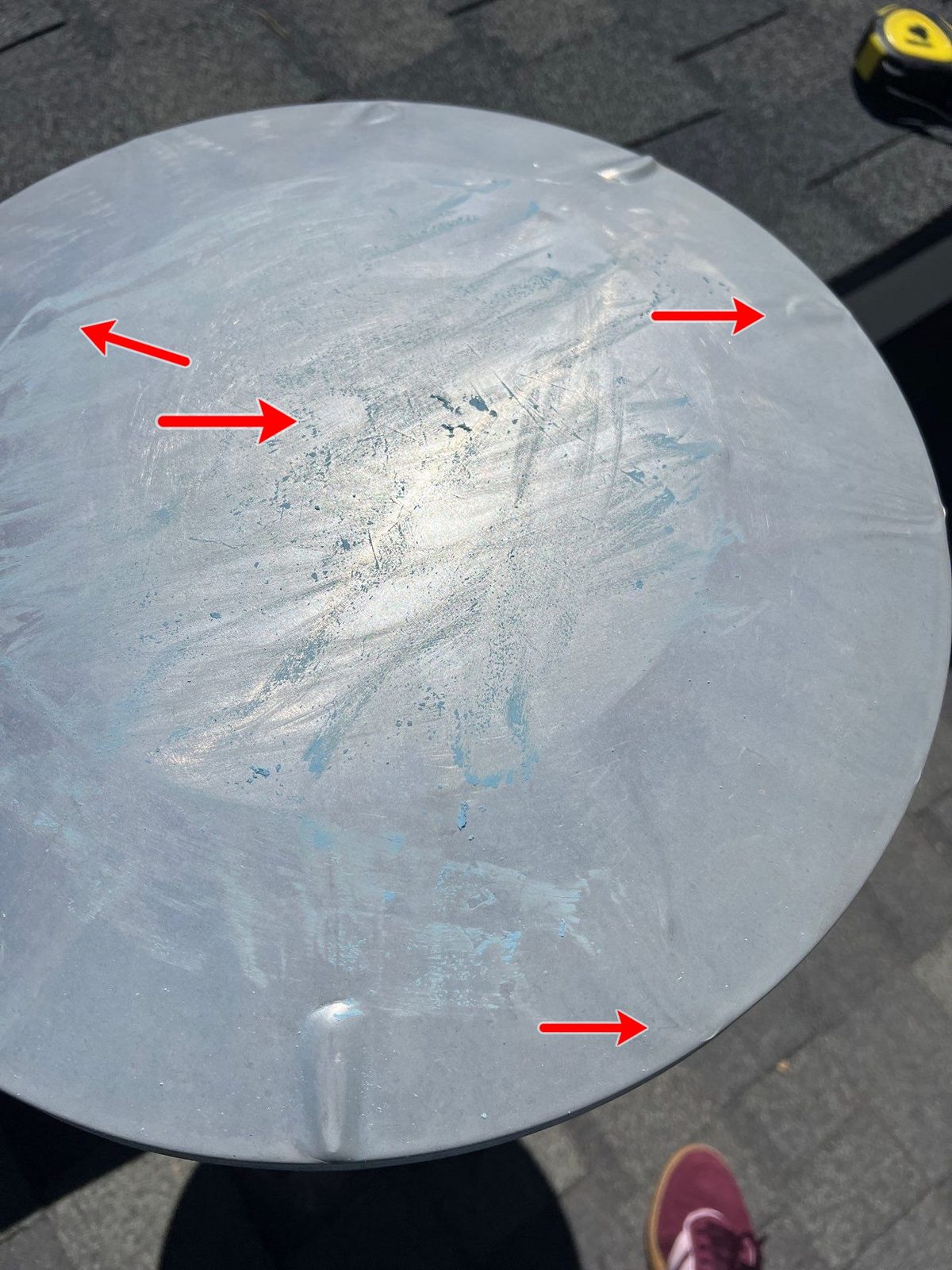
Environmental exclusions catch people off guard, too. Coastal salt spray, industrial chemical fallout, and even certain roof-washing chemicals can void substrate or finish coverage, according to sample warranty language from Sheffield Metals.
Installation-related exclusions are the most avoidable and the most common:
- Using a non-certified installer
- Modifying the roof system without manufacturer approval
- Attaching unapproved accessories, satellite mounts, or solar racking directly through panels
- Failing to provide written notice within the required window after discovering a problem
- Skipping routine maintenance that the warranty document requires
Industry commentary consistently points to one misunderstanding: homeowners assume metal roofing covers every weather event automatically. It doesn’t. Warranties are narrow by design, covering specific defect types under specific conditions.
Metal Roofing Warranty Comparison: Terms, Transfers, and Filing a Claim
Warranty terms vary enough between manufacturers that a side-by-side read of the actual documents matters more than any sales brochure. “Lifetime” coverage almost always means the original owner’s lifetime, not the roof’s lifetime, and it rarely transfers at full value to a new owner.
- Know the term structure. Finish and substrate warranties often run 25 to 40 years. Weathertightness terms vary by manufacturer and installer certification, so compare the actual number on your document, not the marketing language.
- Understand transfer limits. Most warranties allow one transfer to a new owner, often requiring a re-inspection and a transfer fee, and sometimes reducing the remaining term.
- Give notice fast. Sample joint warranties from McElroy require written notice within 30 days of discovering a leak, before repairs are authorized.
- Expect an inspection. The manufacturer or a certified inspector typically reviews the damage before assigning repair responsibility between installer and manufacturer.
- Document the allocation. Get it in writing whether the contractor or manufacturer is covering the repair, especially in the early years of a joint warranty when contractor responsibility often applies first.
If you’re vetting a contractor before installation even starts, ask the right questions upfront about how they handle warranty registration and claims.
Maintenance That Keeps Your Lifetime Metal Roof Warranty Valid
Most warranty denials trace back to missed maintenance, not roof failure. A twice-yearly inspection covering the roof surface, flashings, fasteners, and gutters catches small issues before they become excluded damage.
- Check fastener tightness and flashing seals every spring and fall
- Clear debris and leaves from valleys and gutters before they trap moisture
- Photograph any damage immediately and keep dated records
- Save every invoice, inspection report, and repair receipt in one folder
- Call a certified installer for structural or panel repairs; save DIY work for gutter cleaning and debris removal
Seasonal maintenance routines do more than extend the life of your roof. They build the paper trail you’ll need if you ever file a claim.
Why Contractor-Backed Warranties Reduce Your Claim Risk
Certification status is not a formality. Manufacturer weathertightness warranties frequently require a certified installer to remain valid, and non-certified work can void coverage even when the panels themselves are defect-free. That single detail decides whether a leak becomes a covered repair or an out-of-pocket expense.
A roof engineered to prevent claims before they happen is worth more than a roof with a warranty designed to argue about them after the fact. Two decades spent on both sides of the insurance and roofing business taught that the strongest warranty is the one backed by a contractor who never has to use it.
Sladeroof’s 25-year leak warranty and 50-year product warranty map directly onto the weathertightness and substrate/finish categories described above, backed by a contractor whose installation standards are built around insurance-claim prevention.
Author perspective: three contractor-first recommendations homeowners often miss
Prioritize contractor-backed weathertightness over a manufacturer-only paper warranty. Get written registration and copies of both the manufacturer’s and installer’s warranty in your hands before the crew leaves. Photograph the installation while it’s happening. That documentation is worth more than any glossy brochure when a claim gets disputed.
Get Contractor-Backed Warranty Protection From Sladeroof
Most metal roof warranties split responsibility between a manufacturer who never sets foot on your property and an installer who may or may not still be in business in ten years. Sladeroof closes that gap with a single, contractor-backed package: a 25-year leak warranty and a 50-year product warranty, registered at installation, with documentation handled for you from day one.
When you work with Sladeroof, warranty registration isn’t an afterthought you have to chase down. The team documents your installation, files the manufacturer paperwork, and keeps records ready in case you ever need to file an insurance claim or a warranty claim. If a covered issue comes up later, insurance claim assistance is built into the service rather than bolted on after the fact.
If you’re comparing metal against shingles first, this long-term cost and durability comparison is worth a read before you decide.
Ready to see what contractor-backed coverage looks like on your own roof? Request a roof inspection or warranty consultation and get your documentation started the right way from the first day.
Frequently Asked Questions
What does a metal roof warranty cover? It typically covers four separate categories: finish (paint fading and chalking), substrate (base metal corrosion), weathertightness (leaks), and workmanship (installation errors), each with its own term and issuer.
How long does a lifetime metal roof warranty actually last? “Lifetime” almost always refers to the original owner’s lifetime rather than the physical roof’s lifespan, and coverage often reduces or requires a fee when the home changes hands.
Does using a non-certified installer void my metal roofing coverage? Yes, in many cases. Weathertightness warranties frequently require certification, and installation by an uncertified contractor can void that portion of the coverage even if the panels are defect-free.
What voids a metal roof warranty most often? Missed notice deadlines, skipped maintenance, unapproved roof modifications, and storm or environmental damage are the most common reasons claims get denied.
What should I do if a warranty claim gets denied? Request the denial in writing with the specific policy language cited, gather your maintenance and installation records, and consult a contractor or attorney familiar with roofing warranty disputes if the denial seems inconsistent with the document’s terms.
Sources
- 30-YEAR NO REPAIR LIMIT WEATHERTIGHT LIMITED WARRANTY
- Warranties | Englert Product Warranties
- (Choose one: 5,10,15,20,25) YEAR NO REPAIR LIMIT WEATHERTIGHTNESS LIMITED WARRANTY (McElroy sample)
- Metal Roofing and Siding Warranties | AEP Span Architectural
Recommended
Ready for a real answer on your roof?
Slade Roofing pairs licensed insurance agents with licensed roofers. Get your free inspection in about 30 seconds.
Get My Free Inspection →