
How Roof Age and Insurance Premiums Are Connected
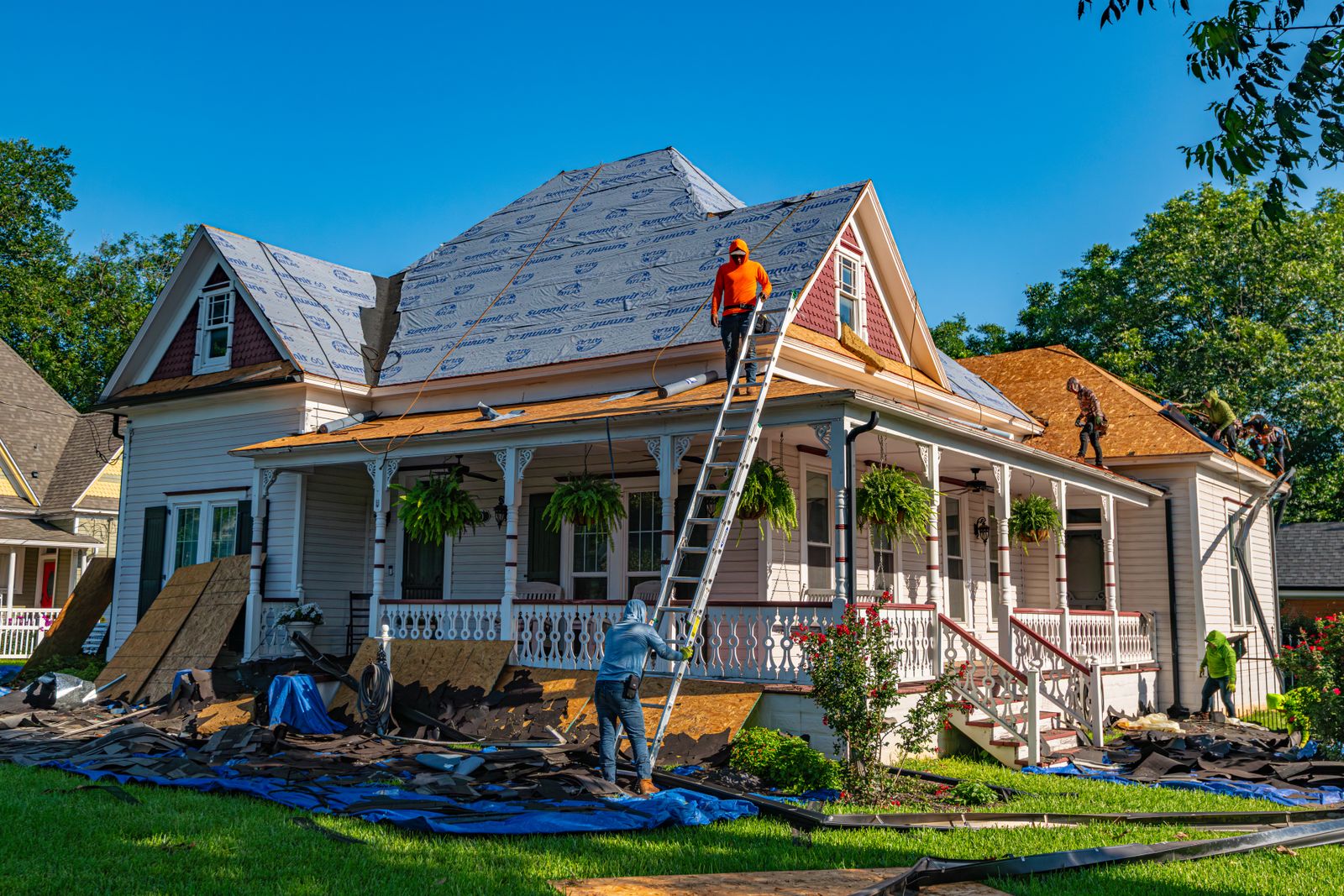
Your roof’s age directly affects your insurance premiums, your ability to renew coverage, and how much you actually collect on a claim. The Insurance Information Institute recommends yearly inspections once a roof passes 15 years and notes that carriers often limit coverage to Actual Cash Value once a roof clears 20 years. That ACV switch can cost you thousands on a single claim. Sladeroof helps homeowners in Idaho, Arizona, and Wyoming navigate exactly this situation.
Here’s what that gap looks like in practice: a full asphalt shingle replacement on an older roof might pay out significantly less under ACV after depreciation, leaving the homeowner to cover a substantial portion out of pocket.
Four things to do right now:
- Schedule a professional inspection and get a written certification.
- Pull your permit records and photograph current roof condition.
- Call your agent and ask whether your policy settles on ACV or RCV.
- Contact a contractor like Sladeroof to assess whether repairs or replacement will preserve your coverage options.
Key Takeaways
Roof age materially affects your insurance premiums, coverage type, and claim payout, and the ACV versus RCV distinction is where most of the financial risk lives.
| Point | Details |
|---|---|
| Age thresholds matter | Carriers commonly begin scrutiny around year 10, request inspections in mid-to-late teens, and nonrenew more often once roofs pass roughly 20 years. |
| ACV vs. RCV is the real risk | An ACV switch at renewal can create a $10,000+ out-of-pocket gap on a full replacement, far larger than any premium increase. |
| Documentation changes outcomes | Photos, permit records, and contractor certifications directly influence how adjusters calculate depreciation and settle claims. |
| Replacement can restore coverage | A new roof, especially with impact-resistant materials, can restore RCV eligibility and qualify for insurer discounts. |
| Sladeroof | Provides inspections, written certifications, warranty-backed replacements, and claim assistance in Idaho, Arizona, and Wyoming. |
Table of Contents
- How roof age and insurance underwriting actually work
- What insurers typically do at each age threshold
- How ACV versus RCV changes what you collect on a claim
- Steps to take before buying or renewing a policy
- How to decide whether to repair or replace
- Warranties and endorsements worth knowing about
- A yearly maintenance checklist for aging roofs
- How Sladeroof supports inspections, documentation, and claims
- The financial logic most homeowners get backwards
- Sladeroof makes the insurance side of roofing straightforward
- Sources
How roof age and insurance underwriting actually work
Insurers price policies around expected claim frequency and severity. An aging roof raises both. A 20-year-old asphalt roof is statistically more likely to fail in a hailstorm than a 5-year-old one, and when it does fail, the repair bill tends to be larger. Age is the underwriter’s shortcut for risk.
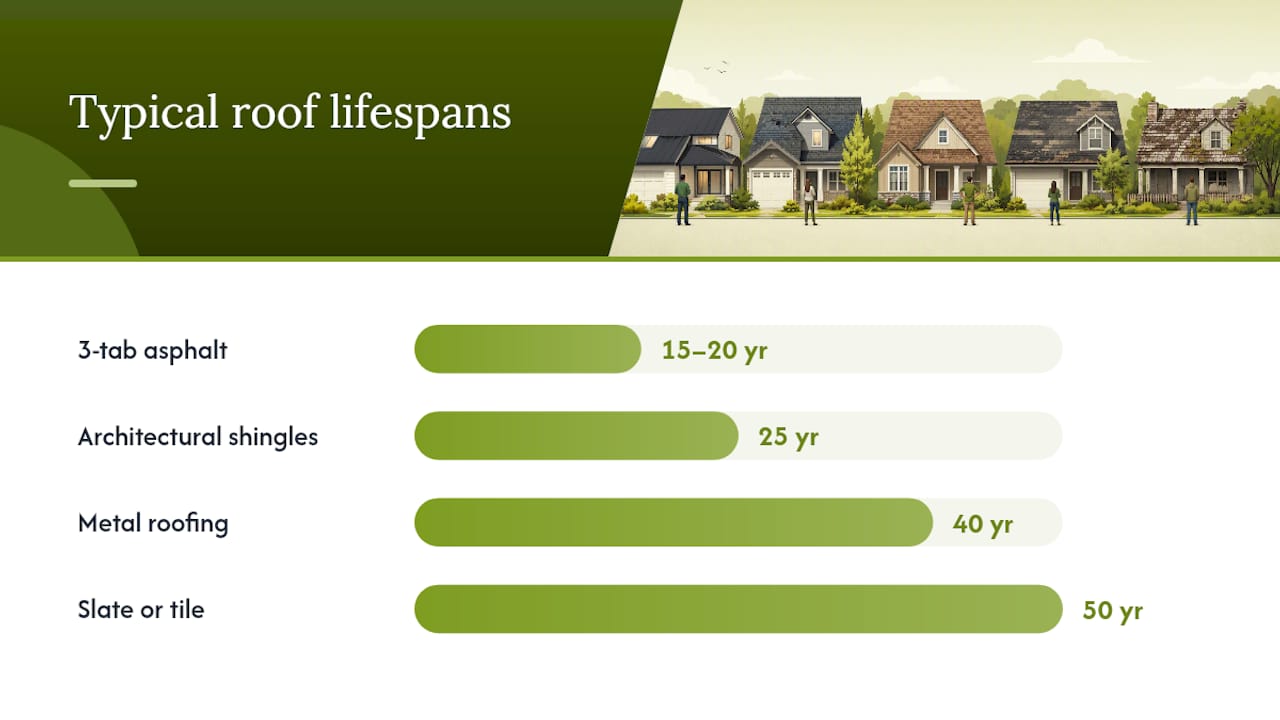
Material matters just as much as calendar age. A 20-year-old metal roof may still qualify for full replacement-cost coverage; a 15-year-old three-tab asphalt roof in a hail corridor might not. Progressive’s guidance on roof types confirms that newer roofs and durable materials like metal and slate typically attract lower premiums and more favorable underwriting treatment.
Condition can override calendar age, but only if you can prove it. A roof that has been actively maintained, with documented repairs and a recent contractor certification, can sometimes keep RCV eligibility past the age at which a neglected roof would lose it.
| Material | Typical Expected Lifespan | Insurer Treatment |
|---|---|---|
| 3-tab asphalt shingles | 15–20 years | Scrutiny begins early; ACV common after 15 years |
| Architectural shingles | 25 years | More favorable; inspections typically triggered at 20+ years |
| Metal roofing | 40 years | Best insurer treatment; discounts common in hail-prone areas |
| Slate or tile | 50 years | Favorable long-term; high replacement cost can raise premiums |
Pro Tip: Ask your insurer which material class your roof falls into on their underwriting grid. The answer tells you exactly when they plan to start asking questions.
What insurers typically do at each age threshold
Carriers don’t treat all roofs the same at every age. Their scrutiny follows a fairly predictable pattern, though exact thresholds vary by carrier, material, and region. Roof Policy’s research maps the typical progression clearly.
- At purchase (any age). The insurer orders an inspection or aerial imagery review. A roof in poor condition can delay or kill the sale.
- Around year 10. Carriers begin closer scrutiny. Some add a roof-condition question to renewal questionnaires or pull updated aerial imagery.
- Years 15–18. Physical inspections become common. Carriers may attach an ACV endorsement or require repairs as a condition of renewal.
- Year 20 and beyond. Nonrenewal risk rises sharply. Many carriers will only offer ACV coverage, and some will decline to renew altogether, particularly for asphalt shingles in storm-prone markets.
- After a major storm event. Claim history, permit mismatches, or storm-activity flags in your zip code can accelerate any of the above steps regardless of age.
Beyond age, carriers also watch for: aerial imagery showing granule loss or ponding, permit records that don’t match the stated installation date, and prior claims that suggest a pattern of weather damage.
How ACV versus RCV changes what you collect on a claim
The coverage type on your policy is the single biggest variable in a roof claim. Progressive explains it plainly: an ACV policy pays the depreciated value of your roof at the time of loss, while an RCV policy pays the full cost to replace it, minus your deductible.
Here’s what that looks like with real numbers. Assume a full replacement costs $15,000 and your roof is near the end of its expected lifespan.
| Settlement Type | Replacement Cost | Depreciation | Deductible | Payout |
|---|---|---|---|---|
| RCV | $15,000 | None applied | Deductible | Amount minus deductible |
| ACV | $15,000 | High depreciation deducted | Deductible | Significantly reduced payout |
This scenario illustrates how depreciation on older roofs can drastically reduce claim payouts. Roof Policy notes that when insurers switch a roof from RCV to ACV at renewal, the financial impact is far larger than any modest premium increase the homeowner was trying to avoid.
Adjusters document photos, permit records, maintenance logs, and evidence of prior repairs to establish condition and depreciation rate. The III’s guidance lists contractor certifications as one of the key documents that can influence how depreciation is calculated. Good documentation can shift a borderline ACV outcome toward a better settlement.
For a deeper look at how these two settlement methods work, Sladeroof’s breakdown of ACV vs. RCV covers the policy language homeowners often miss.
Steps to take before buying or renewing a policy
Waiting until a claim to discover you’re on ACV is expensive. These steps, done before renewal, give you the most leverage.
- Get a professional inspection and ask for a written certification of condition.
- Collect all permit records for the current roof installation and any repairs.
- Photograph the entire roof surface, including flashing, valleys, and gutters.
- Repair obvious defects: missing shingles, exposed flashing, clogged gutters.
- Ask your agent directly: “Is my roof currently settled on ACV or RCV, and what would trigger a switch?”
- Ask about endorsements: an RCV endorsement, a better-roof replacement clause, or an impact-resistant discount.
- Check your wind and hail deductible. Many policies in storm-prone states use a percentage deductible based on dwelling value rather than a flat dollar amount.
Pro Tip: Three to five years of professional inspection records, combined with a contractor certification, sometimes persuades a carrier to extend RCV eligibility on a roof that would otherwise trigger an ACV endorsement. The documentation doesn’t just help at claim time; it helps at renewal.
LegalClarity’s analysis confirms that replacing an aging roof can restore replacement-cost eligibility and improve coverage terms. That’s the financial case for acting before a storm forces the issue.
How to decide whether to repair or replace
Not every aging roof needs immediate replacement. The decision turns on how widespread the damage is and what the insurance implications are.
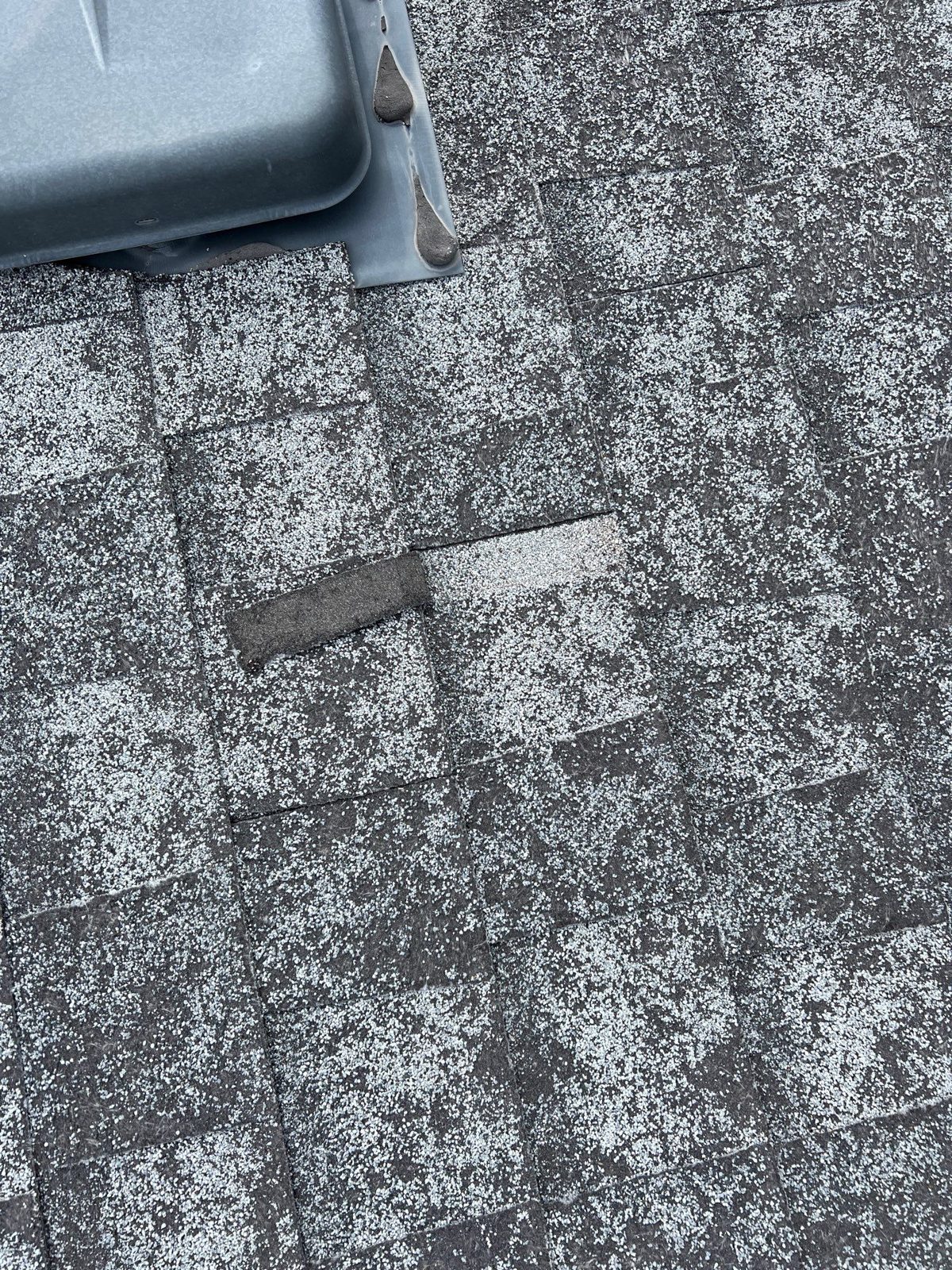
Repair is usually sufficient when damage is isolated: a few missing shingles after a windstorm, a single flashing failure, or a small leak traced to one penetration point. If the underlying deck is sound and the rest of the roof has useful life left, targeted repairs make sense.
Replacement becomes the better call when granule loss is widespread, shingles are curling or cracking across multiple slopes, the deck shows soft spots or sagging, or you’ve had repeated leaks in different locations. At that point, repairs are a holding pattern, not a solution.
The insurance math often tips the decision. A new roof can restore RCV eligibility, lower your annual premium, and eliminate nonrenewal risk. Deferred replacement, by contrast, locks you into rising premiums and ACV exposure. Sladeroof’s repair vs. replacement guide walks through the diagnostic signs in detail, and Vector Claims Solutions offers a useful insurance-side perspective on how carriers evaluate the same choice.
Warranties and endorsements worth knowing about
Impact-resistant shingles rated UL 2218 Class 4 and metal roofing qualify for measurable insurance discounts in hail- and wind-prone regions. The upfront cost is higher, but the insurer savings compound over the roof’s lifecycle. Sladeroof installs both, and the Lightning Protection Institute notes that lightning protection systems can reduce certain structural risks relevant to underwriting as well.
Three endorsements worth asking your agent about:
- RCV endorsement: Keeps replacement-cost settlement even as the roof ages, usually for an added premium.
- Better-roof replacement clause: Requires the insurer to replace with materials of equal or better quality.
- Impact-resistant discount: Available in many states for Class 4 shingles; can offset the material upgrade cost over time.
Pro Tip: Manufacturer warranties and installer warranties both matter to insurers. A 50-year product warranty combined with a 25-year workmanship warranty signals to underwriters that the roof was installed to a higher standard.
A yearly maintenance checklist for aging roofs
The III recommends yearly inspections once a roof reaches 15 years. Here’s what that inspection and routine maintenance should cover:
- Inspect for missing, cracked, or curling shingles after every major storm.
- Clear gutters and downspouts twice a year (spring and fall).
- Trim trees to keep branches at least 6 feet from the roof surface.
- Check and reseal flashing around chimneys, vents, and skylights.
- Remove moss or algae growth before it lifts shingles.
- Document every repair with photos, receipts, and contractor notes.
- Watch for interior warning signs: water stains on ceilings, attic moisture, or daylight visible through the decking.
Sagging anywhere on the roof surface, widespread curling, or multiple interior leaks in different rooms are red flags that warrant a contractor evaluation, not just a maintenance visit. Sladeroof’s commercial maintenance guidance applies equally to residential properties and covers the inspection cadence in detail.
Pro Tip: Keep a simple roof log: date, what was done, who did it, and a photo. Two or three years of entries can make a real difference when an adjuster is calculating depreciation.
How Sladeroof supports inspections, documentation, and claims
Sladeroof brings over 20 years of combined roofing and insurance experience to every job. That dual background shapes how the company handles inspections and claims work.
Every inspection produces a written condition report and photo documentation that meets the standard adjusters expect. When a replacement is warranted, Sladeroof installs impact-resistant and wind- or hail-rated materials, then provides permit records and a contractor certification the homeowner can hand directly to their insurer. The company’s warranties, including a 25-year leak warranty and a 50-year product warranty, give carriers a documented basis for favorable underwriting treatment.
On the claims side, Sladeroof’s process covers the full documentation package: photos, permit records, written certifications, and a scope of work that aligns with adjuster requirements. The company also works directly with insurance agents, which reduces the back-and-forth that slows most claims.
Pro Tip: Involve your contractor before the adjuster’s first visit, not after. A contractor who can walk the adjuster through the damage documentation in real time typically produces a more complete scope and a better settlement.
For a step-by-step look at how the claims process works, Sladeroof’s roofing insurance claims guide is worth reading before you file.
The financial logic most homeowners get backwards
Most homeowners treat roof replacement as something to defer as long as possible. The insurance math usually argues the opposite.
A modest annual premium increase feels manageable. An ACV switch at renewal does not. When a carrier moves a 20-year-old asphalt roof from RCV to ACV, the homeowner’s exposure on a full replacement can jump by $10,000 or more overnight, with no storm required. That’s not a risk event; it’s a policy renewal.
The homeowners who come out ahead are the ones who replaced proactively, documented everything, and upgraded to impact-resistant materials before their carrier started asking questions. The premium savings and restored RCV eligibility typically recover the replacement cost faster than most people expect, especially in hail-prone markets like Idaho and Arizona where storm frequency is high and wind/hail deductibles are steep.
Maintenance and documentation aren’t just good habits. They’re the evidence that separates a full settlement from a depreciated one.
Sladeroof makes the insurance side of roofing straightforward
A roof replacement that also restores your RCV eligibility, qualifies for impact-resistant discounts, and comes with a 25-year leak warranty is a different product than a standard re-roof. That’s what Sladeroof delivers for homeowners and property investors in Idaho, Arizona, and Wyoming.
The process starts with a professional inspection and written certification you can share with your insurer at renewal. From there, Sladeroof handles the documentation, the installation to insurer-recognized standards, and the claim assistance if a storm hits before or after replacement. The warranties give your carrier a concrete reason to keep you on RCV.
Schedule your roof inspection and insurance claim assistance with Sladeroof today, or browse residential roofing services to see what a warranty-backed replacement looks like for your property.
Sources
- How Your Roof Influences Your Home and Business Insurance
- How Roof Types Affect Homeowners Insurance | Progressive
- How Your Roof’s Age Affects Your Insurance | Roof Policy
- Does the Age of Your Roof Affect Insurance Rates? - LegalClarity
This article is general information, not a substitute for advice from a qualified financial advisor. Consult a qualified financial professional about your own circumstances before acting on anything here.
Recommended
Ready for a real answer on your roof?
Slade Roofing pairs licensed insurance agents with licensed roofers. Get your free inspection in about 30 seconds.
Get My Free Inspection →