
Roofing Warranties Explained: What Actually Protects You
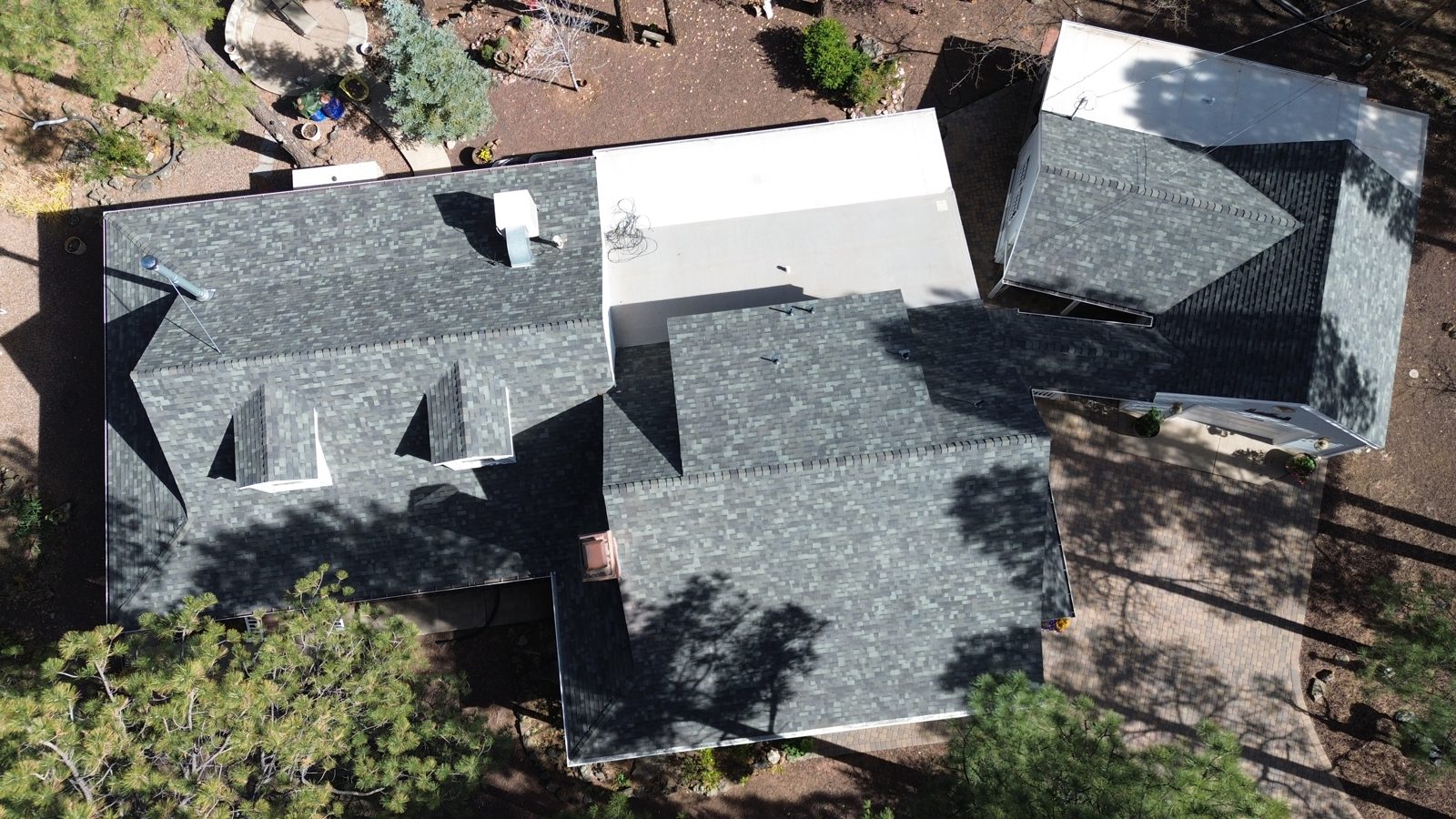
A roof typically carries two separate warranties: the manufacturer warranty for materials and the contractor (workmanship) warranty for installation. Both matter, but for different reasons, and confusing them is how homeowners get blindsided when something leaks.
- Manufacturer warranty: covers defective shingles, membranes, or panels; issued by the maker, not your roofer.
- Workmanship warranty: covers installation mistakes; issued by whoever put the roof on, and only as good as that company’s staying power.
- System/extended tiers: available only through manufacturer-certified installers, and they’re the difference between a thin baseline policy and one that actually pays for labor.
Early on, workmanship matters most. Most roof failures in the first decade trace back to installation, not material defects, according to WhatDoesARoofCost’s breakdown of warranty types. Manufacturer coverage becomes the bigger deal once the roof ages past that window.
Key Takeaways
Workmanship warranties protect the first decade of your roof’s life, while manufacturer warranties matter most in later years, and both require registration to stay valid.
| Point | Details |
|---|---|
| Two warranties, two purposes | Manufacturer covers materials; workmanship covers installation errors, and both need tracking separately. |
| Registration has a deadline | Manufacturer registration windows often run 30 to 90 days; missing it can lower your coverage tier. |
| Proration erodes value over time | Non-prorated coverage often lasts 10 to 15 years, after which payouts shrink as the roof ages. |
| Certification unlocks better tiers | Manufacturer-certified installers qualify homeowners for extended labor coverage and longer non-prorated windows. |
| Sladeroof registers and documents for you | Sladeroof backs installs with a 25-year leak warranty and 50-year product warranty, handling registration and documentation directly. |
Table of Contents
- Roofing Warranties Explained: The Three Types You’ll Encounter
- What Voids a Roof Warranty (And How to Avoid It)
- How Long Do Roofing Warranties Actually Last?
- Registering and Preserving Your Roof Warranty
- How to File a Warranty Claim Without Getting Denied
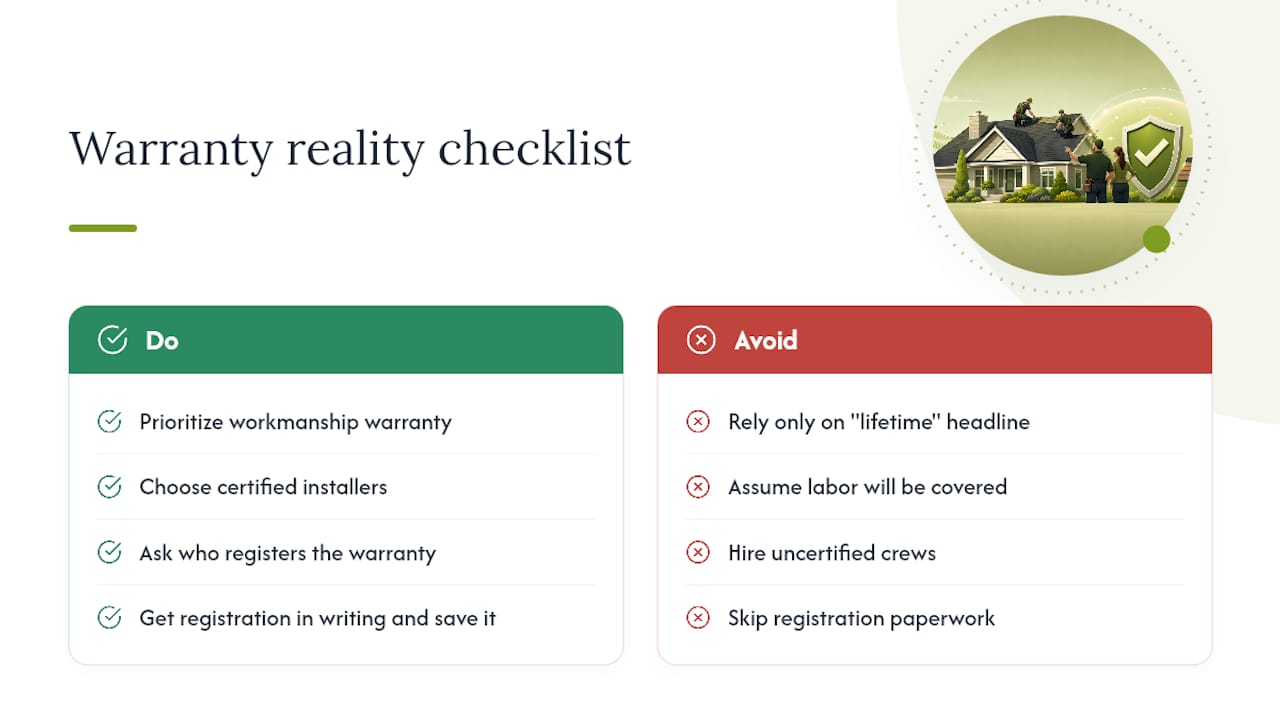
- Warranty Checklist to Confirm Before You Sign
- How Sladeroof Handles Warranty Protection in Practice
- The Gap Between Warranty Marketing and Warranty Reality
- Get a Warranty Review Before Your Roof Becomes a Claim
- Where to Verify Exact Warranty Terms
- Sources
Roofing Warranties Explained: The Three Types You’ll Encounter
Roofing warranties explained simply come down to three tiers, and the differences between them are bigger than most homeowners assume.
1. Standard limited manufacturer warranty
This is the baseline that comes with every shingle or panel purchase. It covers manufacturing defects, things like a shingle that curls prematurely or a membrane that fails from a factory flaw, but it excludes installation errors entirely. Most standard warranties also exclude labor costs after the first few years, meaning you could get free replacement shingles and still pay a crew out of pocket to install them.
2. Workmanship warranty
Your contractor issues this one, and it covers errors made during installation: bad flashing, wrong nail placement, poor sealing around vents. The catch is durability. A workmanship warranty is only as solid as the company behind it, and roofing contractors go out of business more often than manufacturers do. This is why most early roof failures being installation-related makes this warranty so important in years one through ten.
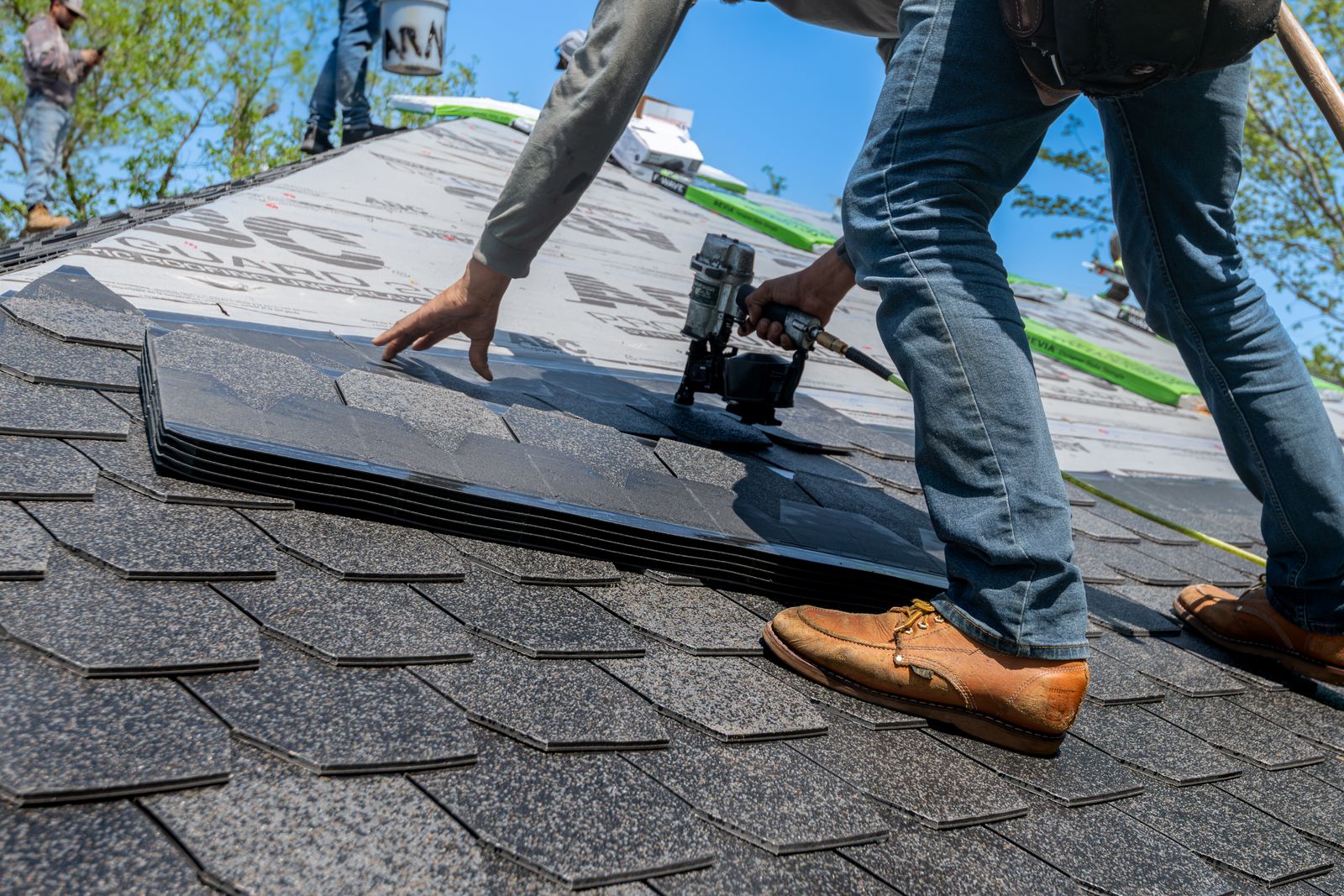
3. System, extended, and premium tiers
These require manufacturer-certified installers and bundle multiple components (shingles, underlayment, ventilation, flashing) under one policy. In exchange, you often get extended labor coverage and longer non-prorated periods.
Pro Tip: Ask your contractor which specific tier they’re quoting by name, not just “lifetime warranty.” A standard tier and a premium tier can have identical shingles but wildly different labor coverage if a tear-off is needed years down the road.
What Voids a Roof Warranty (And How to Avoid It)
Warranty denials rarely come from bad luck. They come from specific, predictable triggers that manufacturers check for during claim inspections.
- Inadequate attic ventilation: manufacturers inspect airflow because trapped heat and moisture accelerate shingle failure, and poor ventilation is one of the most commonly cited denial reasons.
- Unauthorized repairs or third-party penetrations: a solar installer or satellite crew who punches through your roof without coordinating with your original installer can classify that work as mechanical damage.
- Mixing brands or components: pairing one manufacturer’s shingles with another’s underlayment often breaks system-level coverage entirely.
- Overlaying instead of tearing off: installing new shingles over old ones instead of stripping the roof is a common cause of voided coverage.
- Pressure washing, heavy foot traffic, and missed registration deadlines round out the list of self-inflicted wounds.
According to Angi’s rundown of void triggers, inadequate ventilation, unapproved repairs, and brand mixing are among the most frequent reasons claims get denied. The fix for most of these is coordination: tell your original installer before anyone else touches your roof, and keep a copy of your ventilation specs on file.
How Long Do Roofing Warranties Actually Last?
“Lifetime” and “25-year” labels sound absolute, but the fine print usually tells a different story.
Manufacturers structure most warranties around a non-prorated window, commonly the first 10 to 15 years, according to CertainTeed’s warranty explainer. Inside that window, a defect gets you full replacement value. After it expires, coverage prorates, meaning the manufacturer’s payout shrinks the older your roof gets.
Here’s roughly how that plays out over time:
| Roof Age | Typical Coverage Status |
|---|---|
| Years 1 to 10 | Non-prorated: full material and often labor coverage |
| Years 16 to 25 | Prorated: partial material value, labor usually excluded |
| Years 26 and beyond | Prorated: minimal material value remaining |
Transferability adds another wrinkle. Most manufacturer warranties allow a one-time transfer to a new homeowner, usually within a set window (often 30 to 60 days after closing) and sometimes for a transfer fee. This matters at resale, since a transferable, still-active warranty is a genuine selling point. Flooring warranties follow a similar pattern, and Quality Hardwoods of Michigan’s explanation of warranty transfers is a useful reference for how these one-time windows work across home warranty categories generally.
Registering and Preserving Your Roof Warranty
A warranty you never register is a warranty you don’t fully have.
- Register within the deadline. Manufacturer registration windows commonly run 30 to 90 days after installation, and missing that window can drop you to a lower coverage tier automatically.
- Confirm who’s responsible. Some contractors register on your behalf; others expect you to do it. Get this in writing before the crew leaves.
- Save your paperwork. Keep the invoice, registration confirmation, dated photos of the finished roof, and any inspection reports in one folder.
- Stay on top of maintenance. Manufacturers expect basic upkeep, ventilation checks and debris clearing chief among them, and skipping it can undercut a future claim.
Pro Tip: Take photos of your attic ventilation and flashing details right after installation. If a claim ever hinges on “was this installed correctly,” dated photos are worth more than your memory of the job.
How to File a Warranty Claim Without Getting Denied
Who you call first depends on what actually failed, and getting this wrong wastes weeks.
- Workmanship issue (a leak near a vent, a flashing gap): call your original contractor first.
- Material defect (shingles cracking or granules failing prematurely): contact the manufacturer directly, since your contractor may need to file on your behalf.
- Storm damage (hail, wind, fallen limbs): that’s an insurance claim, not a warranty claim, and your insurer becomes the first call.
Document everything before you call anyone. Take photos of the damage, note the date you noticed it, pull your maintenance logs, and have your original invoice ready. Inspectors reviewing a claim commonly check nail placement, ventilation, and whether all system components are from the same manufacturer. Mixed components are one of the most common reasons manufacturers cite when denying a claim outright.
If your claim gets denied and you believe it shouldn’t have been, Sladeroof’s guide to how roofing insurance claims work walks through the ideal escalation process, and Vector Claim Solutions offers additional support for homeowners navigating a denied insurance claim specifically.
Warranty Checklist to Confirm Before You Sign
Ask these questions before any contract gets signed, and get the answers in writing.
- What’s the exact warranty name and tier? “Lifetime” means nothing without the specific product line and certification level attached to it.
- Who registers it, and by when? Confirm this is the contractor’s job, and get a copy of the confirmation once it’s done.
- Does it cover labor, and for how long? A materials-only warranty can leave you paying full tear-off and disposal costs even on a covered defect.
- What’s the non-prorated window? Ten years and fifteen years are common numbers, but they change your math significantly if a problem shows up in year twelve.
- How does transfer work if you sell the house? Get the fee and window in writing now, not when a buyer asks about it later.
Pro Tip: A certified installer usually costs more upfront, but that premium often buys you a longer non-prorated window and labor coverage a standard installer can’t offer. It’s worth asking for the price difference in writing. For a broader rundown of what to ask, Sladeroof’s contractor questions guide covers the non-warranty red flags too.
How Sladeroof Handles Warranty Protection in Practice
Warranty terms only protect you if someone actually follows through on the paperwork, and that’s where a lot of roofing jobs quietly fail homeowners.
- Sladeroof registers qualifying manufacturer and system warranties on the customer’s behalf, so coverage doesn’t lapse over a missed deadline.
- Every install is documented with dated photos and inspection notes, the same records that determine whether a future claim gets approved.
- Sladeroof backs its work with a 25-year leak warranty and a 50-year product warranty, giving homeowners a longer non-prorated runway than many standard installs.
A roof engineered to prevent claims before they happen is worth more than a roof with a long warranty and a short lifespan. The goal isn’t just coverage on paper. It’s a roof that rarely needs to use it.
Sladeroof also assists with maintenance planning, since manufacturers expect upkeep like ventilation checks as a condition of staying covered.
The Gap Between Warranty Marketing and Warranty Reality
Most warranty marketing leans on the word “lifetime” because it sounds absolute. It isn’t. A lifetime warranty on shingles almost always means lifetime coverage on materials, prorated after the non-prorated window closes, with labor excluded well before that. Homeowners who don’t do the proration math end up shocked when a year-eighteen leak costs them thousands in labor despite a “covered” material defect.
The conventional advice, “get the longest warranty you can,” misses the actual lever that matters: certification. A 50-year warranty installed by an uncertified crew can be voided by the very ventilation or component mismatch that certification training is designed to prevent. The paperwork means nothing if the installation itself creates the failure.
If you take one thing from all this, prioritize the workmanship warranty and the installer’s certification status over the manufacturer’s headline number. Ask who’s responsible for registration, get it in writing, and keep your documentation from day one. That combination protects you more reliably than any warranty length printed on a brochure.
Get a Warranty Review Before Your Roof Becomes a Claim
Sladeroof gives homeowners something most roofing marketing skips: certified installers who register your warranty for you, document the job, and know exactly what triggers a denial before it happens. That combination, certified installs plus 25-year leak and 50-year product coverage, means less guesswork about what’s actually protected.

If you’re not sure what your current roof’s warranty status looks like, or you’re planning new work and want it done in a way that preserves full coverage, Sladeroof can run a residential roofing inspection and walk you through exactly what’s registered, what’s covered, and what maintenance keeps it that way. For commercial property owners, the same certified-install approach applies through Sladeroof’s commercial roofing services. If a storm has already caused damage, Sladeroof also handles insurance claim assistance to make sure paperwork and warranty documentation line up with what your insurer needs. Request an inspection and get a straight answer on where your coverage actually stands.
Where to Verify Exact Warranty Terms
For the precise proration schedules and registration steps tied to your specific shingles or system, read the manufacturer’s own warranty page, such as CertainTeed’s warranty guide. For a plain-language walkthrough of common void triggers in practice, Angi’s explainer on what voids a roof warranty is worth a read before you sign any contract.
Sources
- Roofing Warranties Explained: Manufacturer vs Workmanship
- Understanding roof warranties | CertainTeed
- What voids a roof warranty | Angi
- What Is a Roofing Warranty? Complete Guide | Econo Roofing
- Roofing Warranties Explained | WhatDoesARoofCost
Recommended
Ready for a real answer on your roof?
Slade Roofing pairs licensed insurance agents with licensed roofers. Get your free inspection in about 30 seconds.
Get My Free Inspection →