Signs You Need a New Roof: When to Call a Roofer
By Tyler Slade | Owner, Slade Roofing & Canyonlands Insurance
By Tyler Slade | Owner, Slade Roofing & Canyonlands Insurance
Your roof is the single most important barrier between your family and the elements. Just imagine waking up to a water stain spreading across your ceiling - or worse, discovering that a small, easily fixable warning sign turned into a full structural replacement because it was caught too late. The good news? Your roof almost always tells you when it needs attention. You just need to know what to listen for.
As the owner of Slade Roofing since 2016 and Canyonlands Insurance since 2005, I've seen both sides of this equation - the roofing damage and the insurance claim that follows. I've been published in Korsgaden Insights and have taught insurance agents on the topic of insurance fraud. But what truly separates Slade Roofing isn't just my background - it's the team we've built. Our crew includes former Farmers CAT team adjuster Justin Cook (20 years of field experience), former Farmers desk adjuster Calandra Green, independent adjuster Jordan Beals (10 years), and insurance agent and office manager Nick Mon, alongside Farmers agent Forrest Pain. We know exactly how insurance companies evaluate damage - because we used to work for them. What I can tell you from that combined experience is this: the homeowners who recognize the warning signs early are always better off - financially, legally, and in terms of their home's long-term value.
Here are the signs you need a new roof, and when to call a roofer.
1. Your Roof Looks Shiny or Reflective
This one surprises most homeowners, but it's one of the most telling signs of a roof in serious decline.
When asphalt shingles age, they lose their protective granule coating. Once enough granules have worn away, the underlying fiberglass mat begins to show through - and it has a distinct, almost glossy sheen in sunlight. The more surface area you see shining on your roof, the more urgency you should feel about calling a professional.
This kind of wear can mean one of two things: your roof has simply reached the end of its service life, or you may be experiencing a manufacturer defect. Either way, a shiny roof is not a cosmetic issue - it's a structural one. Always remember to look at your roof from the ground after a sunny day. If sections catch the light in a way they didn't used to, that's your roof asking for help.
You're going to love having a roofer catch this early. A worn-out shingle system identified before leaks develop is far less expensive to address than one that's allowed water to infiltrate the decking underneath.
2. You Have Missing Shingles
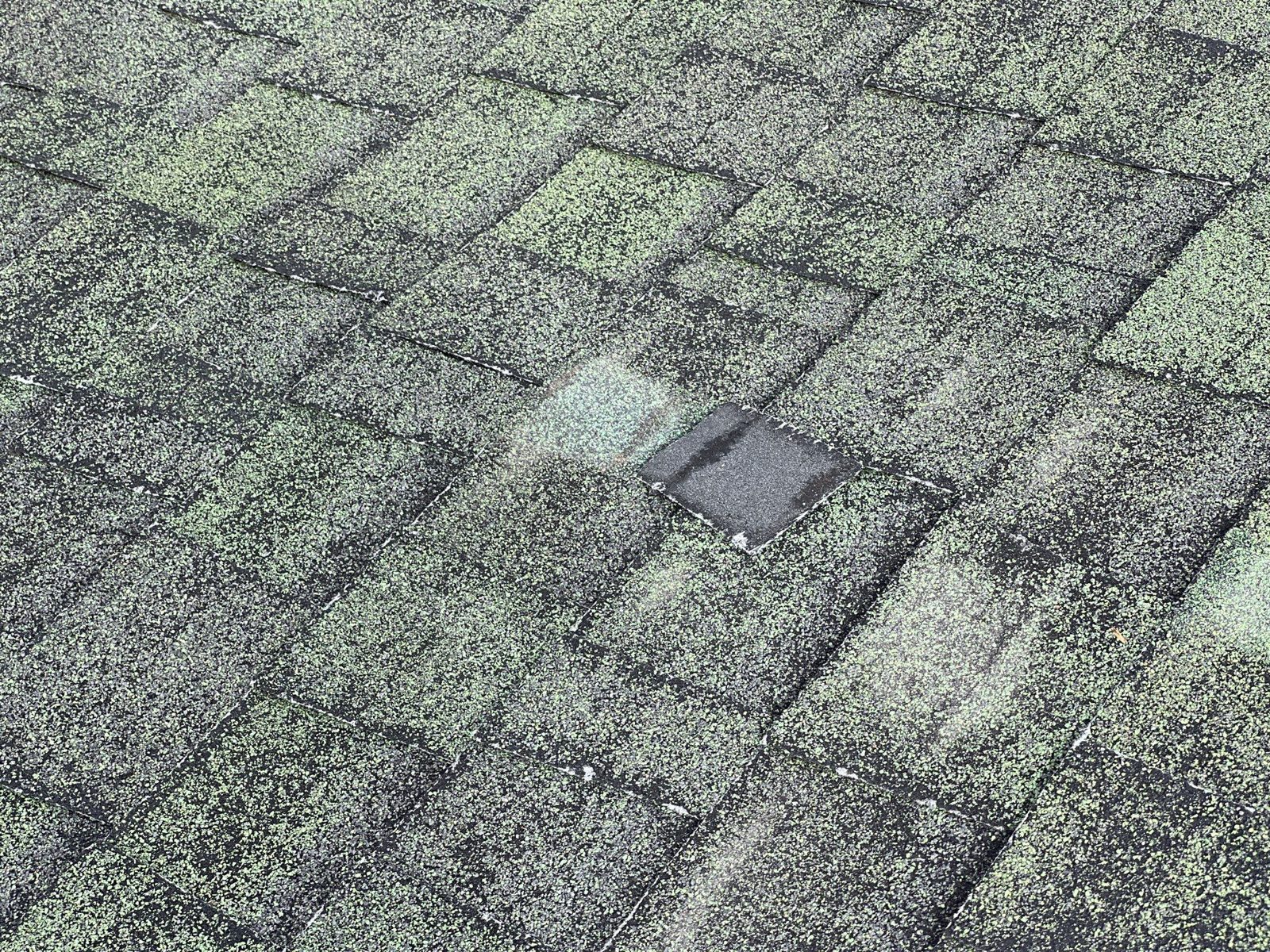
Missing shingles are one of the most visible - and most urgent - signs that your roof needs immediate attention. A single missing shingle leaves the underlayment and decking exposed to UV rays, wind, rain, and ice. The more shingles that are missing, the faster the surrounding area deteriorates.
Missing shingles are commonly caused by:
- High winds or storm events
- Aging adhesive that has dried out and failed
- Improper original installation
- Ice dam damage
Just imagine what a single rainstorm does to an exposed patch of decking with no shingle protection. Water infiltrates, wood begins to rot, and what started as a $300 shingle replacement can quietly become a $10,000 decking repair.
Always remember: missing shingles are never a wait and see situation. Call a roofer as soon as you notice them.
3. You're Experiencing a Leak
An active roof leak is the clearest possible sign that something has failed - and it requires immediate action.
Leaks often show up first as water stains on ceilings or walls, drips near light fixtures or in attic spaces, or a musty smell that suggests hidden moisture. By the time you see visible water inside your home, the exterior breach has typically been present for some time.
The more quickly you respond to a leak, the more you'll protect your home's structural integrity, your insulation, your drywall, and the air quality inside your living spaces. Mold can begin developing in as little as 24 to 48 hours after water infiltration.
As someone who has operated an insurance agency since 2005, I can tell you that prompt documentation and a fast call to a licensed roofer is always the right move. You're going to love how much smoother the claims process goes when you've acted quickly and have a professional assessment in hand.
4. You Just Went Through a Hailstorm - Call Immediately
This one is critical, and it's where my background in both roofing and insurance really converges.
After a significant hailstorm, always get your roof professionally inspected - even if you don't see obvious damage from the ground. Hail impacts cause what's called bruising on asphalt shingles: the granule coating is knocked loose in circular impact patterns, compromising the shingle's ability to shed water and resist UV degradation. This damage is often invisible to an untrained eye but very visible to an experienced, credentialed inspector. Every Slade Roofing inspector is HAAG Certified in wind and hail damage - the same certification used by insurance companies and engineering firms to establish whether storm damage is legitimate. The more qualified the eyes on your roof, the more accurately your damage will be assessed and documented.
The more time that passes after a hailstorm without an inspection, the more you'll risk:
- Your insurance company attributing damage to wear and tear rather than the storm event
- Losing your window to file a valid claim
- Compounding damage from subsequent rain or wind
I've spoken professionally on the topic of preventing insurance claims and have taught insurance agents about fraud. Here's what I know to be true from both sides: legitimate storm damage claims are strongest when they're filed promptly with a professional inspection report. Always remember to call a roofer - not just your insurance company - first. A qualified roofing professional can document the damage properly and help make sure you're treated fairly in the claims process.
It's also worth knowing what real storm damage looks like. At Slade Roofing, our mission is to fix the insurance industry by eliminating frivolous claims - which we define as wind damage under 130 mph or hailstones under 2.5 inches in diameter. Just imagine a world where 95% of unnecessary roof claims are eliminated, premiums stabilize, and homeowners only file when there's genuine, significant damage. That's the world we're working toward. In fact, to date, Slade Roofing has not lost a single shingle to wind or hail - because we build and install with that standard in mind.
5. Granules Accumulating in Your Gutters
When you clean your gutters or notice what looks like coarse, dark sand washing out of your downspouts, that's asphalt granule loss - and it's a significant indicator of shingle deterioration.
Some granule shedding is normal on newer roofs. But the more granules you find in your gutters year after year, the closer your roof is to the end of its useful life. Granules protect the asphalt layer from UV degradation. Without them, shingles crack, curl, and fail rapidly.
Just imagine your gutters as a diagnostic tool. They're telling you, in plain material terms, exactly how fast your roof is aging.
6. Sagging or Uneven Roof Planes
A healthy roof should have clean, straight lines along its ridges and planes. The more waviness, dipping, or sagging you notice, the more likely there is underlying structural damage - rotting decking, failed supports, or prolonged moisture infiltration.
Sagging is a serious structural warning sign and should always prompt an immediate call to a licensed roofer. This is not a repair to delay.
7. Moss, Algae, or Dark Streaking
Dark streaks running down your roof are typically caused by algae (Gloeocapsa magma), which feeds on the limestone filler in asphalt shingles. Moss growth retains moisture against the shingle surface, accelerating deterioration and potentially lifting shingle edges over time.
While not always an emergency on their own, moss and algae growth signals that your roof's surface is holding moisture - and should be evaluated by a professional who can assess whether the underlying shingles have been compromised.
8. Your Roof Is 20-25 Years Old
Even a roof with no visible problems deserves a professional inspection once it reaches the 20-year mark. Most standard 3-tab asphalt shingles are rated for 20-25 years. Architectural shingles can last 25-30 years under good conditions.
The more proactive you are about age-based inspections, the more likely you are to catch problems before they become emergency replacements - and the more negotiating power you'll have when it comes to insurance renewals and home sales.
When in Doubt, Call a Professional
You're going to love the peace of mind that comes from a professional roof inspection. A licensed roofer can identify issues that simply aren't visible from the ground, document conditions that support insurance claims, and give you an honest picture of how much service life your roof has left.
At Slade Roofing, we've been serving homeowners since 2016 with honest assessments and quality workmanship. Every one of our roof inspectors is HAAG Certified in wind and hail damage - the gold standard in the industry, trusted by insurance carriers and courts alike. Our team of former insurance adjusters, underwriters, and agents understands the claims process from the inside out - which means we fight for you with knowledge, not just tools. And with Canyonlands Insurance in your corner since 2005, we understand what proper documentation means for your claim - and your wallet. Our mission is to fix the insurance industry by helping homeowners make smart, honest decisions about their roofs. We don't chase storms. We build roofs that don't need to be chased.
Just imagine going into next year's storm season knowing your roof has been professionally evaluated, your vulnerabilities addressed, and your insurance documentation is in order. That's not just peace of mind - that's smart homeownership.
Always remember: your roof protects everything beneath it. Treat it accordingly.
About the Author
Tyler Slade is the founder and owner of Slade Roofing (est. May 2016) and Canyonlands Insurance (est. August 2005). He has been published in Korsgaden Insights, the magazine for insurance agents, and has spoken publicly and taught insurance agents on the topics of preventing insurance claims and insurance fraud. Tyler founded Slade Roofing with a mission to fix the insurance industry by eliminating frivolous claims and setting a higher standard for roofing integrity. All Slade Roofing inspectors are HAAG Certified in wind and hail damage. His team includes former Farmers CAT team adjuster Justin Cook, former Farmers desk adjuster Calandra Green, independent adjuster Jordan Beals, insurance agent and office manager Nick Mon, and former Farmers agent Forrest Pain. To date, Slade Roofing has not lost a single shingle to wind or hail.
Ready for a real answer on your roof?
Slade Roofing pairs licensed insurance agents with licensed roofers. Get your free inspection in about 30 seconds.
Get My Free Inspection →